Electrical Products & Services
Recognize burning smells, sparks, flickering lights and shocks — stop use, evacuate for fire risks, call 911 and a licensed electrician.
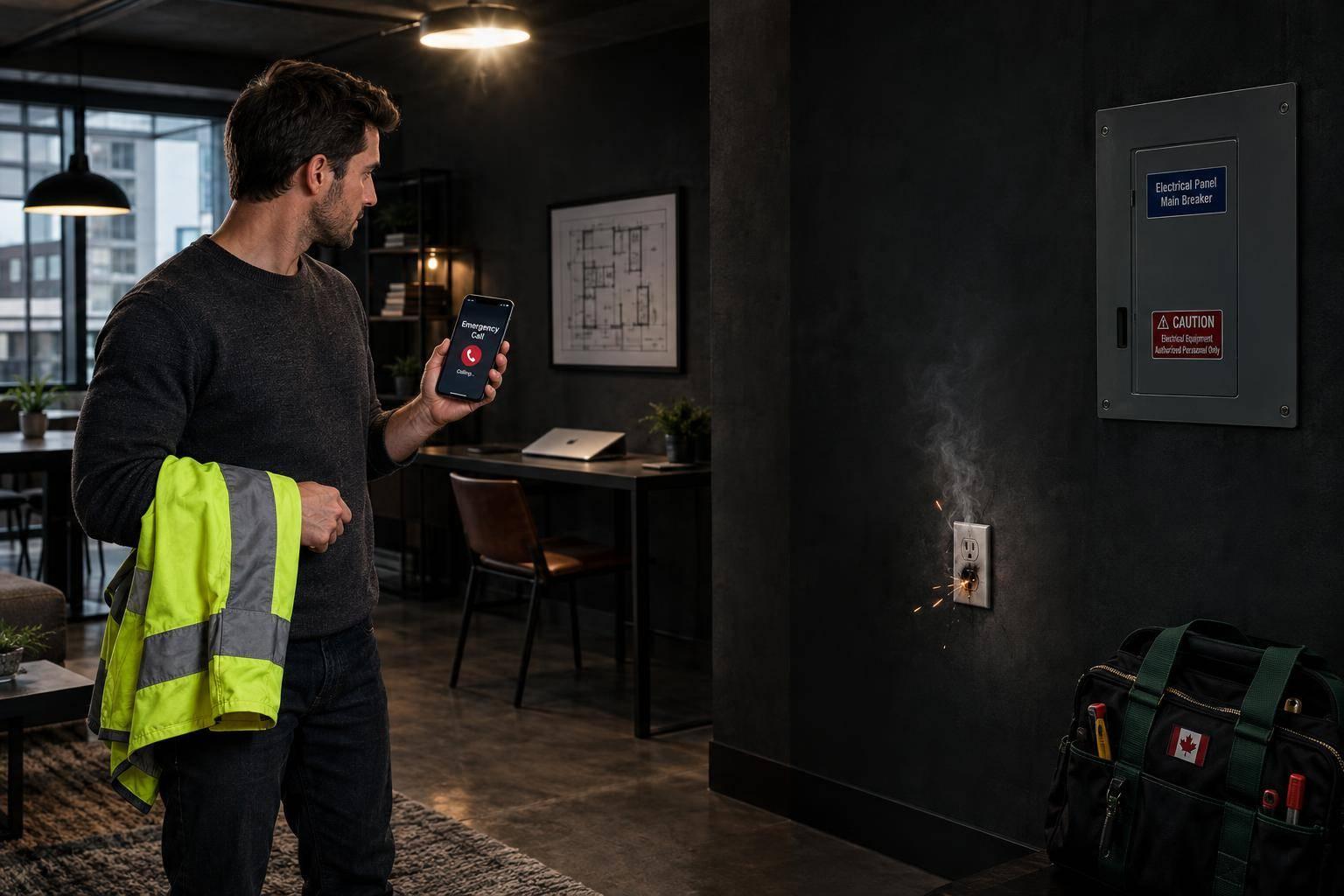
My first rule for electrical warning signs: stop using the affected equipment – don’t test it again. If there’s smoke, fire, active arcing or a strong or spreading burning odour, leave and call 911 from a safe location.
At home or in an Ottawa Valley office, I watch for:
Keep people clear, avoid wet or damaged equipment and never repeatedly reset a breaker. <u>Power staying on does not mean the fault is fixed.</u> Once any immediate danger is controlled, have a licensed electrical contractor assess and repair the fault before restoring use.
A plastic-like burning smell, melted plastic, scorch marks or a hot, discoloured outlet usually points to overheating, a loose connection or a failing device. Persistent sparks, buzzing, crackling, sizzling or popping may mean arcing or equipment failure.
Stop using the affected equipment. Disconnect it only if the plug and outlet are cool, dry and safe to touch. Never touch hot or sparking parts.
If a panel smokes or sparks, leave the area and call 911 from outside.
Dimming, flickering or sudden brightening may point to a loose connection, an overloaded circuit, a faulty fixture or a supply issue. Stop using the circuit rather than testing it again. Have a professional assess repeated flickering or dimming. If several rooms or work areas are affected, contact the electricity utility too.
A tripped breaker or blown fuse is a protective response – not proof that the fault is fixed. Possible causes include overloads, short circuits and damaged equipment.
Do not repeatedly reset breakers, replace blown fuses or fit a higher-rated fuse. Keep the affected circuit out of use until it has been assessed. In an office, notify facilities staff and keep others from reconnecting equipment.
Tingling, shocks, exposed wires, frayed cords, cracked plugs and loose outlets are signs of shock and fire risk. Stop using the equipment and keep people clear. Never touch exposed wiring, try to recreate a shock or use tape as a repair.
Do not touch anyone still in contact with electricity; call 911. Get medical advice after any electrical shock, even if symptoms seem minor.
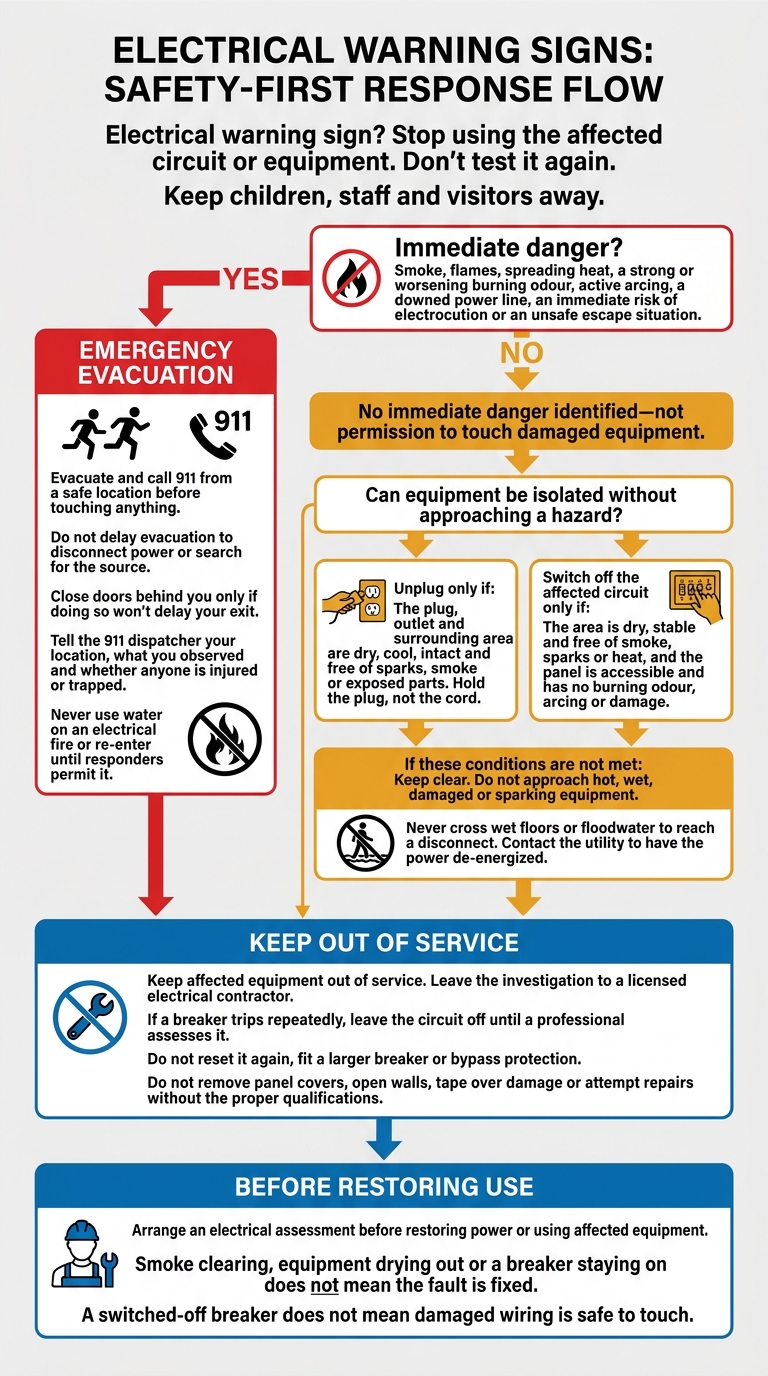
Electrical Emergency: Choose the Safest Response
Electrical warning signs mean it’s time to act – not troubleshoot. If there’s immediate danger, evacuate and call 911 from a safe location before touching anything. Stop using the affected circuit or equipment as soon as you notice a warning sign.
Keep children, staff and visitors away from the area. Unplug equipment only when the plug, outlet and surrounding area are dry, cool, intact and free of sparks, smoke or exposed parts. Hold the plug, not the cord.
Only isolate power when the area is dry, stable and free of smoke, sparks or heat. Switch off the affected circuit only if the panel is accessible and has no burning odour, arcing or damage. A switched-off breaker does not mean damaged wiring is safe to touch. Never cross wet floors or floodwater to reach a disconnect. Contact the utility to have the power de-energized.
Use this guide to choose the safest next step.
| Situation | Safe action | Action to avoid |
|---|---|---|
| Equipment can be safely isolated | Unplug it or switch off the circuit under the conditions above. | Approaching hot, wet, damaged or sparking equipment. |
| Smoke, flames, spreading heat or a strong or worsening burning odour | Evacuate and call 911. | Searching for the source or delaying evacuation to disconnect power. |
| Exposed wiring or active arcing | Keep people clear. Call 911 for active arcing or an immediate shock risk. | Touching, moving or covering wiring. |
| The fault may be inside a panel, wall or ceiling, or components are damaged | Keep affected equipment out of service. Leave the investigation to a licensed electrical contractor. | Removing panel covers, opening walls, taping over damage or attempting repairs without the proper qualifications. |
| A breaker trips repeatedly | Leave the circuit off until a professional assesses it. | Resetting it again, fitting a larger breaker or bypassing protection. |
Leave immediately if you notice any of the fire warning signs above, a downed power line, an immediate risk of electrocution or an unsafe escape situation. Close doors behind you only if doing so won’t delay your exit. Tell the 911 dispatcher your location, what you observed and whether anyone is injured or trapped.
Never use water on an electrical fire or re-enter until responders permit it.
Once the danger is controlled, arrange an electrical assessment before restoring power or using affected equipment. You can also perform a home electrical safety checklist to identify other potential hazards. Smoke clearing, equipment drying out or a breaker staying on does not mean the fault is fixed.
The same warning signs can point to different risks at home and in the office.
Overloaded outlets, linked power bars and extension cords used as permanent wiring create risks around high-demand appliances. Plug major appliances directly into suitable wall receptacles. Warm or discoloured outlets and recurring room outages need professional assessment. Note whether the problem affects one area or several, but leave wiring checks to a licensed electrician.
Faults with heating equipment, sump pumps, refrigerators or standby generators need attention – even if nothing else is affected. Stop using EV chargers if cables are damaged, plugs overheat or charging repeatedly stops. Generator connections require approved transfer equipment installed by a qualified electrician. Never improvise a connection or backfeed through a wall outlet.
Moisture adds shock risks in kitchens, bathrooms, laundry areas, garages, basements, pools and outdoor outlets. Stay clear of wet equipment. Never enter standing water to reach a panel. Have an electrician check for appropriate ground-fault circuit-interrupter (GFCI) protection and wet-location outlet covers. Neither makes wet or damaged equipment safe to use.
Shared workstations, charging stations and print areas can place heavy demands on circuits. Promptly report overheated power bars, cords damaged by carts or foot traffic, and moisture near kitchens, washrooms or mechanical rooms. Repeated trips or lighting changes across work areas usually point to a shared circuit or building-supply problem.
Report outages affecting security, communications, emergency lighting or fire protection to the building contact immediately. Identify which systems and work areas lost power without testing other equipment. Do not delay evacuation for repairs or recovery. Keep people away from affected areas, follow the workplace emergency plan and leave access clear for responders. If the risk is active, stop use and move to the response steps below.
At home or in the office, the rule is the same: stop using affected equipment, keep people clear and leave the power off until the fault has been checked. This applies to burning odours, sparks, heat, buzzing, shocks, flickering lights and repeated trips. Keep affected circuits out of service until a licensed electrician confirms the fault has been repaired.
Evacuate and call 911 from a safe location if there’s smoke, flames, spreading heat, or a strong or spreading burning odour. Give the exact address and report any injuries or trapped occupants. Never use water on an electrical fire. Calling an electrician does not replace emergency response.
Once the area is safe, arrange prompt electrical service for persistent non-emergency faults, such as flickering lights or unexpected outages. If you are concerned about power reliability, you may want to choose a standby generator for your property. If immediate danger develops, evacuate and call 911.
Once the immediate hazard is under control, qualified electrical professionals can test circuits, inspect panels and connections, and repair damaged parts. Draper Electric provides residential and commercial services in the Ottawa Valley, including troubleshooting, maintenance, installations and renovations.
When requesting service, explain when the symptoms began, which areas were affected and what equipment was running. Do not test the fault again, open panels or approach unsafe equipment to gather details.
Yes. An electrical fire can start without tripping a breaker. Breakers cut power during certain overloads or faults, but they don’t detect every hazard. Loose wire connections, damaged insulation, or small electrical arcs can ignite nearby materials without drawing enough excess current to trip the breaker.
Burning odours, warm or discoloured outlets, buzzing sounds, and flickering lights are warning signs that need immediate professional attention from Draper Electric.
Surge protectors help reduce the risk of electrical fires by diverting excess voltage to ground during power surges or spikes. They work best when properly installed in a layered system that combines whole-house protection with point-of-use protectors. This setup helps protect against surges caused by lightning, external sources and appliance use.
Choose UL-listed protectors and have a licensed electrician install them to avoid safety hazards caused by improper grounding.
Before work begins, ask for the contractor’s ECRA/ESA licence number. Check it against the Electrical Safety Authority (ESA) website’s list of licensed electrical contractors to confirm they hold a valid licence to perform electrical work in Ontario.
Draper Electric operates under ECRA number 7009006 and provides residential and commercial electrical services across the Ottawa Valley.