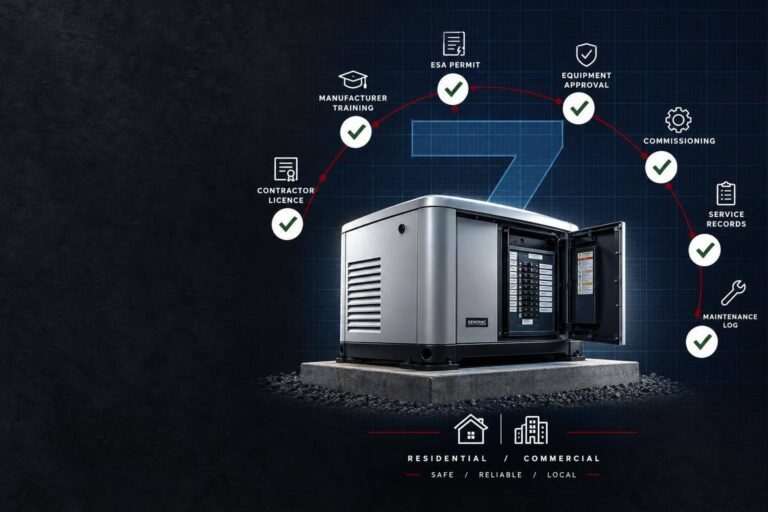
Electrical Products & Services
Daily generator inspection guide: check enclosure, vents, fuel, battery and controls; log findings, stop for faults and schedule repairs.
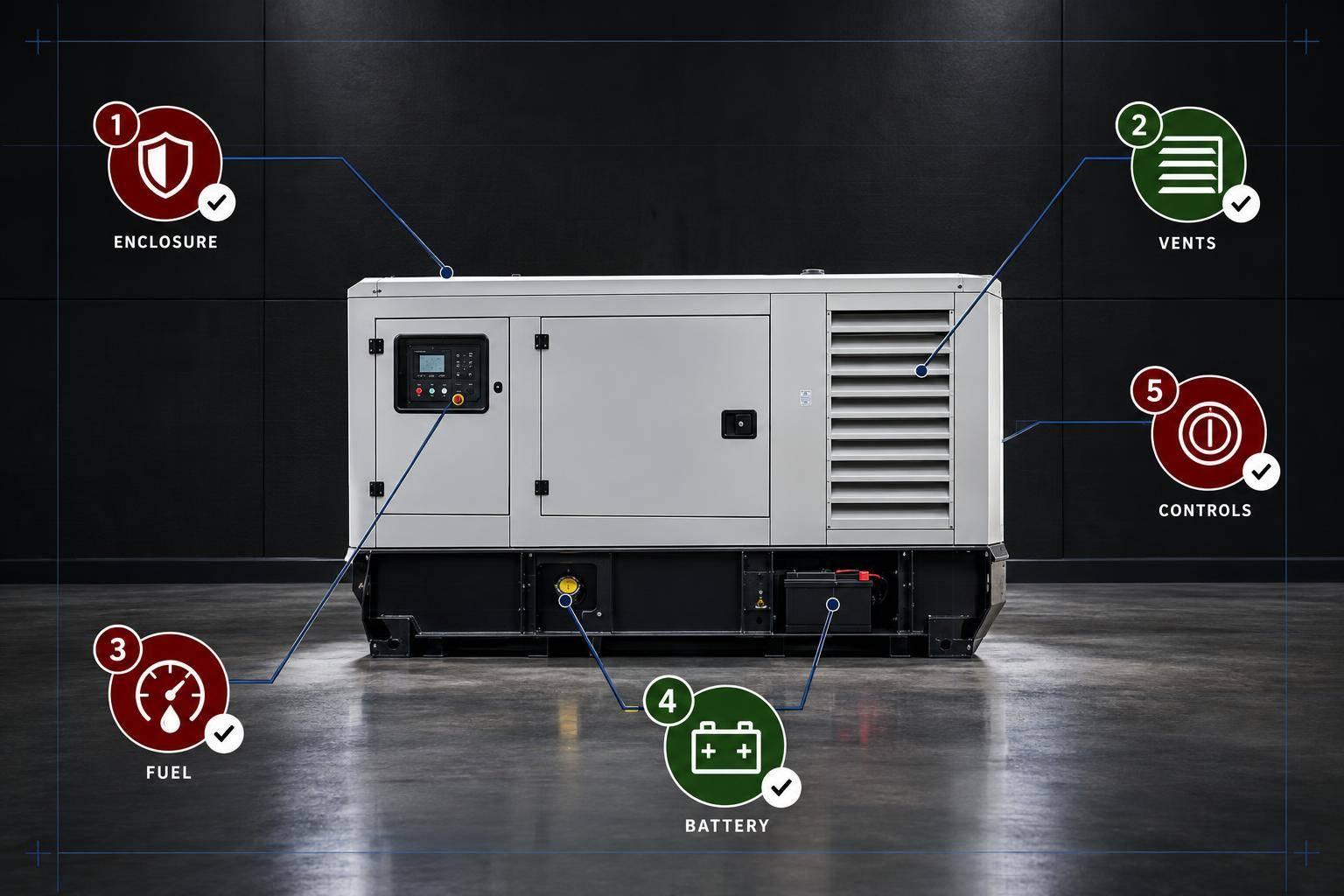
Before I start a generator, I check for leaks, damage, blocked vents and unresolved alerts. Before touching it, I shut it down, let it cool and follow the manual’s steps to prevent automatic starting. This is especially important if you have a transfer switch installation that manages power flow.
My daily checklist covers five areas:
<u>Daily checks do not replace scheduled service.</u> I follow the manufacturer’s manual and mark checks that do not apply as N/A.
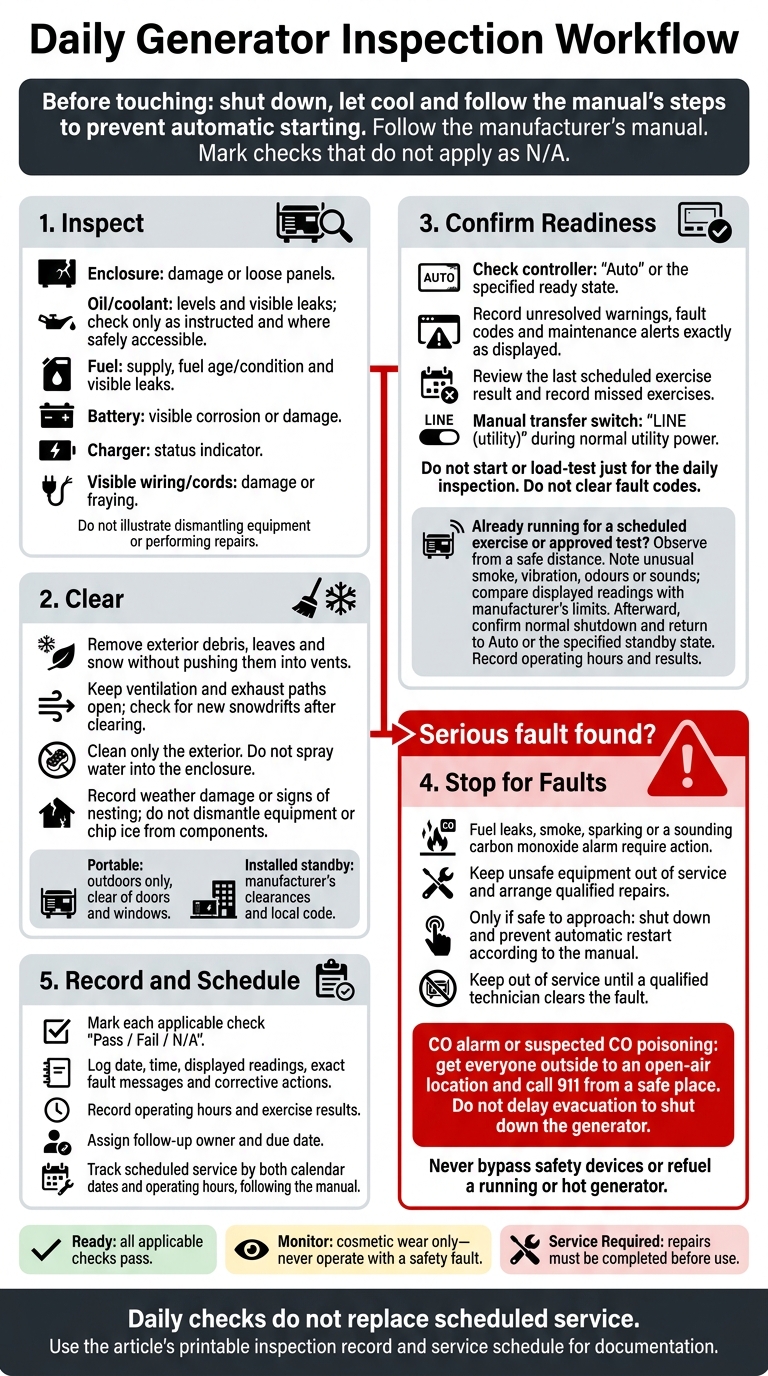
Daily Generator Maintenance Checklist
Once the inspection passes, clean only the exterior and keep access points clear.
Remove surface debris, leaves and snow without pushing them into vents. Follow the manual when wiping exterior surfaces, and keep water out of openings. Do not spray water into the enclosure.
After snow, freezing rain or high winds, check the enclosure for blocked openings or damage. Record any weather damage or signs of nesting for service. Do not dismantle equipment or chip ice from components.
Keep intake and exhaust paths clear so the generator can run safely.
Run portable generators outdoors only, clear of doors and windows. For installed standby units, follow the manufacturer’s required clearances and local code – not portable-generator spacing.
Keep ventilation and exhaust paths free of snow, and check for new drifts after clearing.
With the enclosure clear, check that the controller shows Auto or the specified ready state. If a display is fitted, check it for unresolved warnings, fault codes or maintenance alerts.
Review the last scheduled exercise result. Record any missed exercises and active alerts exactly as displayed. Do not clear fault codes. For a manual transfer switch, confirm it is in LINE (utility) during normal utility power.
Do not start or load-test the generator just to complete the daily inspection.
If the generator is already running for a scheduled exercise or an approved test, observe it from a safe distance. Compare startup behaviour and displayed readings with the manufacturer’s limits. Note any unusual smoke, vibration, odours or sounds. Do not approach running components to investigate.
After the scheduled run, confirm that the generator shuts down normally and returns to Auto or the specified standby state. Record operating hours, the exercise result and any abnormal readings or behaviour. Leave unresolved alerts for service review; do not reset them.
If a daily check reveals a serious fault, stop using the generator and take it out of service. Fuel leaks, smoke, sparking or a sounding carbon monoxide alarm all require action.
If you suspect carbon monoxide poisoning, move everyone to an open-air location and call 911 from a safe place. Do not delay evacuation to shut down the generator.
If you can approach safely, shut down the generator and follow the manual’s steps to prevent automatic restart. With a manual transfer switch, move the switch to LINE (utility), turn off the generator, then unplug the power cord. With an automatic transfer switch, follow the control interface instructions in the unit’s manual.
Never bypass safety devices or refuel a running or hot generator.
From a safe location, enter the date, time, displayed readings and exact fault message in the daily inspection record. Include any corrective action taken. Keep the generator out of service until a qualified technician clears the fault.
Once you’ve logged the fault, arrange service promptly. For electrical maintenance and troubleshooting in the Ottawa Valley, contact Draper Electric.
Record the results of the checks above. Mark each item Pass / Fail / N/A, and check fluid levels only as instructed in the manual.
Generator ID / model: __________ Location: __________
Date: __________ Time: __________
Ambient temperature: _____ °C Hour meter: ______ h
Inspector: __________ Signature: __________
Work-order reference: __________
| Check | Pass | Fail | N/A | Findings / corrective action |
|---|---|---|---|---|
| Enclosure: damage or loose panels | ☐ | ☐ | ☐ | |
| Oil/coolant: levels and visible leaks | ☐ | ☐ | ☐ | |
| Fuel: supply, fuel age/condition and visible leaks | ☐ | ☐ | ☐ | |
| Battery: visible corrosion or damage | ☐ | ☐ | ☐ | |
| Charger: status indicator | ☐ | ☐ | ☐ | |
| Exterior: debris, snow/ice and clear ventilation/exhaust paths | ☐ | ☐ | ☐ | |
| Visible wiring/cords: damage or fraying | ☐ | ☐ | ☐ | |
| Controls: ready status and alerts | ☐ | ☐ | ☐ | |
| Safety devices and alerts | ☐ | ☐ | ☐ | |
| Exercise history: last exercise date/result | ☐ | ☐ | ☐ | |
| Corrective actions: follow-up completed or assigned | ☐ | ☐ | ☐ |
Overall status: ☐ Ready ☐ Monitor ☐ Service Required
Follow-up owner/due date: __________ Clearance reference: __________
Ready means all applicable checks pass. Monitor applies to cosmetic wear only – never operate with a safety fault. Service Required means repairs must be completed before use.
Follow the manual’s operating-hour and calendar intervals for service and load testing. Record the next due date and hour-meter reading, and mark equipment-specific tasks N/A where they don’t apply.
Daily checks focus on safe inspection, clear ventilation and readiness. Record your findings and refer faults for service. Use the schedule below to keep these checks separate from required service work.
| Maintenance Task | Daily Owner/Operator Check | Scheduled Service Requirement | Responsible Person |
|---|---|---|---|
| Oil and filters | Check level/leaks as instructed | Change oil and filters at specified intervals | Owner/operator; service provider |
| Coolant | Check level/leaks where safely accessible | Inspect and replace per manual; N/A if not fitted | Owner/operator; technician |
| Battery and charger | Check appearance and indicators | Battery load test, terminal cleaning and charger checks | Owner/operator; technician |
| Fuel system | Check supply and visible leaks | Inspect lines, filters and tank condition | Owner/operator; technician |
| Electrical connections | Inspect visible wiring only | Connection torque and insulation testing | Qualified electrical professional |
| Exercise and load testing | Review exercise history | Approved exercise and periodic load testing per requirements | Operator as authorised; technician |
Yes, your generator needs regular maintenance – even if it rarely runs. Poor maintenance causes most generator failures. Units that sit unused can still develop degraded fuel, failed batteries, or mechanical blockages.
Check weekly for leaks, rust, and debris. Once a month, run the generator for 20 to 30 minutes under a partial load. This helps keep the engine lubricated, the battery charged, and the system ready for emergencies.
After a prolonged power outage, check your generator and electrical components before returning to normal use:
Before temperatures fall below −10°C, check that your battery warmers and block heaters work. Switch to full synthetic 5W-30 oil, which stays fluid down to −30°C to help with cold starts.
Keep propane tanks at least 20% full to prevent pressure issues. After every major snowfall, clear snow and ice from exhaust vents to prevent carbon monoxide buildup.