Electrical Products & Services
Estimate transfer switch size, backed-up loads, and generator capacity for your Canadian home before you speak with an electrician.
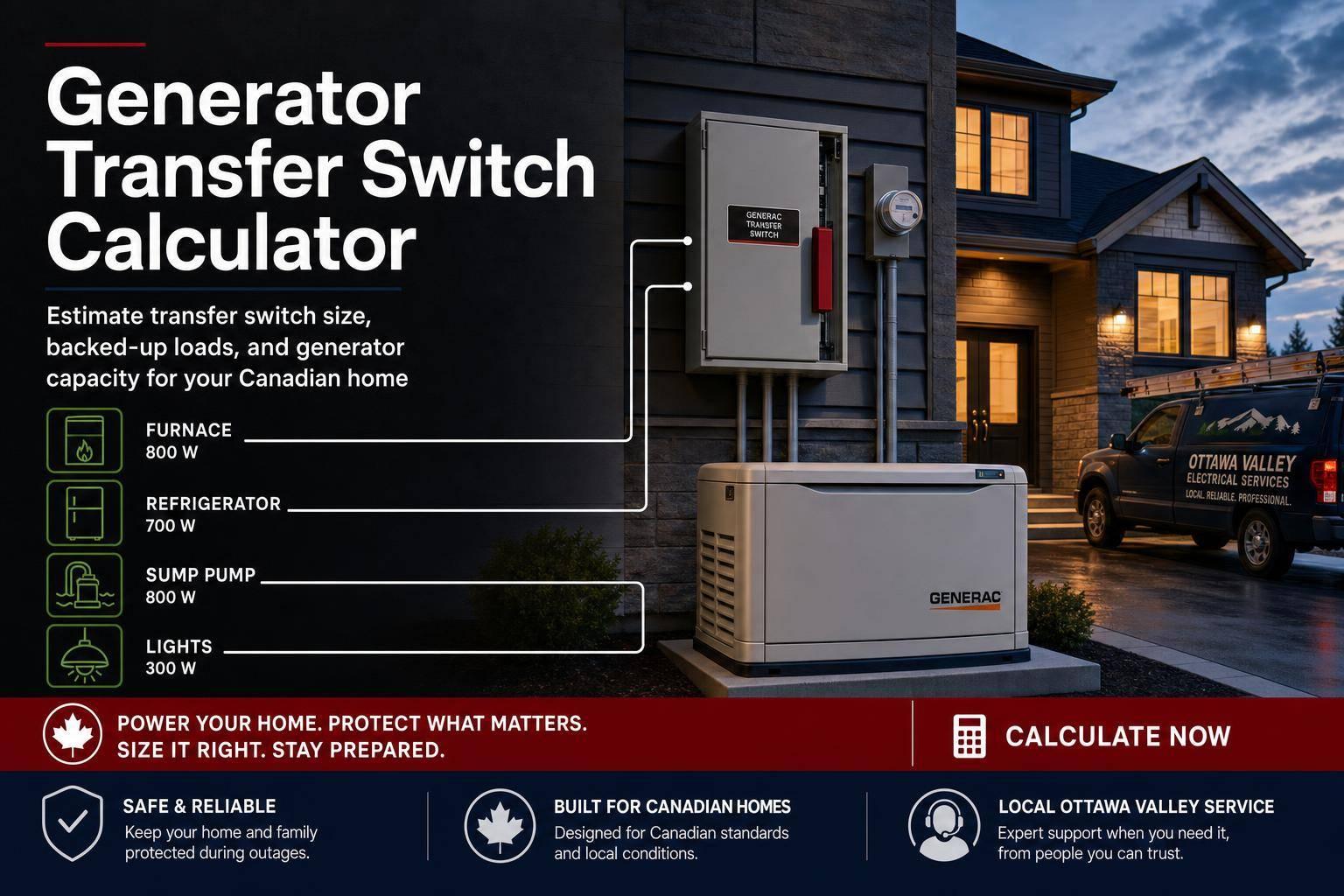
Choosing a generator setup for your home isn’t just about buying enough wattage. You also need to understand what loads you want to support, how much starting surge certain appliances need, and whether the transfer switch is sized properly for the job. A Generator Transfer Switch Calculator helps simplify that first step.
This tool estimates your total running load, accounts for motor startup demand, and shows whether your generator’s capacity lines up with the circuits you want to back up. It also gives you a practical transfer switch size estimate based on voltage and total load, which is especially helpful when comparing common options like 30A, 60A, and 100A.
You can quickly add common essentials such as a fridge, sump pump, furnace blower, microwave, well pump, lighting, and general outlets. If you enter amps instead of watts, the calculator converts them automatically. The result is a clearer picture of what your portable or standby unit can realistically handle.
A generator transfer switch calculator is useful for early planning, budgeting, and load trimming, but final equipment selection still needs to be confirmed by a licensed electrician. That extra check matters for code compliance, safe installation, and dependable backup power when you need it most.
The right size depends on the total backed-up load, the voltage, and how many circuits you want connected through the switch. A good estimate starts by adding the running watts of the loads you plan to use during an outage, applying a safety margin, and then converting that total to amps. If the result lands near a common tier such as 30A, 60A, or 100A, that usually points you toward a practical switch size. That said, the final choice also depends on your panel, wiring method, generator type, and local code requirements, so the calculator should be treated as a planning tool rather than a final specification.
Motor-driven equipment often needs a short burst of extra power when it starts. That surge can be much higher than the normal running load, and if your generator can’t supply it, the appliance may fail to start or the generator may trip. That’s why the calculator separates running watts from starting demand and explains the method used for the estimate. For many homes, the largest single motor surge is the most realistic planning approach, though a more conservative combined method can be useful if several motor loads may start around the same time.
No. It’s designed to help you estimate load requirements and compare them with generator capacity in plain language, but it does not replace electrical design, inspection, or code review. In Canada, transfer switch selection and installation must follow the applicable electrical code, manufacturer instructions, and local authority requirements. A licensed electrician should confirm the final equipment size, breaker arrangement, wiring, and installation details before anything is purchased or installed.