Electrical Products & Services
Estimate EV charging time, energy use, and cost in Canada for Level 1, Level 2, and DC fast charging.
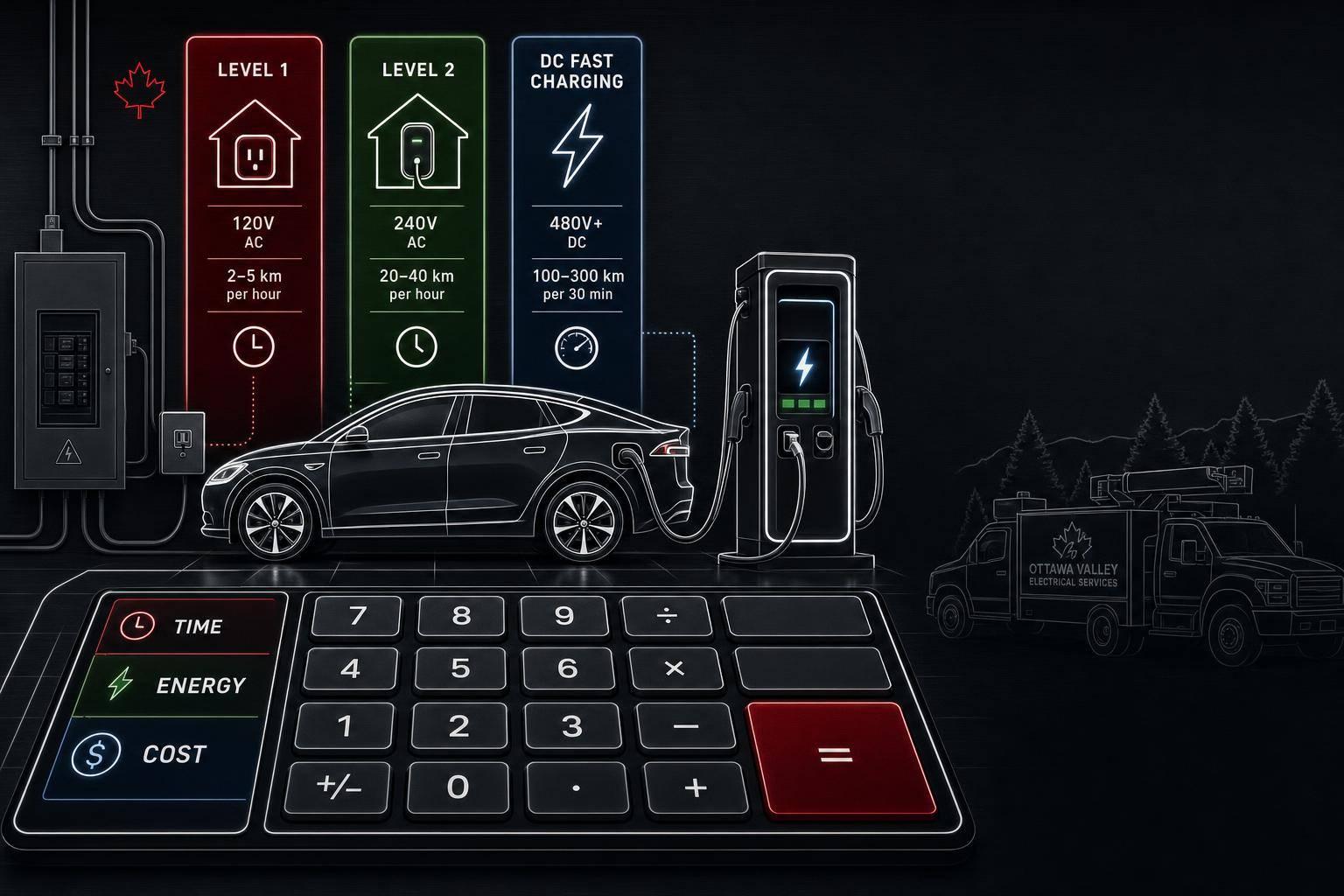
Planning an EV charge is easier when you can see the time, energy use, and cost before you plug in. This EV Charger Calculator is designed for Canadian drivers who want quick, practical answers for home charging and public fast charging. Whether you’re comparing a basic Level 1 outlet, a faster Level 2 setup, or a DC fast charger on the road, the tool helps you estimate how much energy your vehicle needs and what that electricity may cost.
For homeowners, it’s a simple way to check whether overnight charging will cover tomorrow’s commute. For drivers on the go, it can show how a fast-charging stop may affect travel time and budget. You can also account for charging efficiency, electricity rates, and optional time-of-use pricing, which is especially useful in provinces where peak and off-peak rates matter.
If you enter your vehicle’s consumption in kWh/100 km, the calculator can also estimate added driving range. That makes this EV charging cost calculator useful not just for budgeting, but for day-to-day planning. Results are estimates, of course, and real-world charging can vary with battery temperature, vehicle limits, and charging conditions.
It’s a solid planning estimate, but it won’t be perfect in every situation. Real charging speed often tapers as the battery gets closer to full, especially during fast charging sessions. Weather, battery temperature, charger availability, and your vehicle’s own charging limits can all affect the final time.
Energy added to the battery is the amount stored in the pack. Energy drawn from the grid is higher because some electricity is lost during the charging process as heat and system overhead. That’s why charging efficiency matters when estimating cost.
For many EVs, daily charging to a lower target such as 80% is often recommended unless you need the extra range for a trip. Staying below a full charge can help reduce charging time and may be easier on the battery over the long term. For road trips or specific needs, charging higher can still make sense.