Electrical Products & Services
Estimate generator wattage for home backup, RVs, job sites, and small business loads with surge watts, buffer options, and practical guidance.
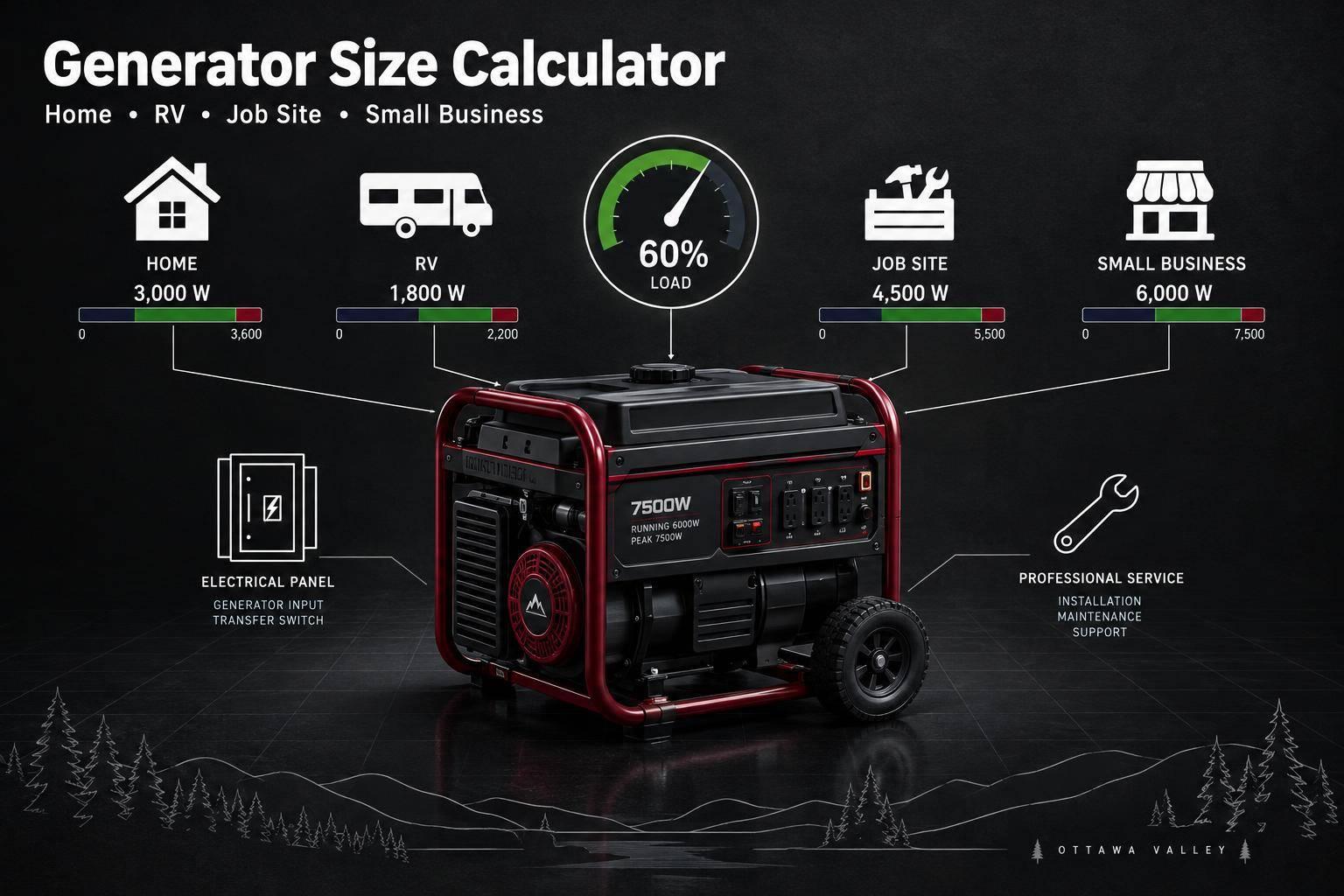
Choosing the right generator isn’t just about picking the biggest unit you can afford. A good generator size calculator helps you match power output to the loads you actually plan to run, whether that’s a few home essentials during an outage, equipment at a job site, or key systems in an RV. The important part is understanding both running watts and startup surge, since many motors and compressors draw extra power for a brief moment.
If a generator is too small, it may trip, struggle to start equipment, or wear down faster under constant strain. If it’s too large, you may spend more than necessary and end up with a less efficient setup. This wattage estimator gives you a clearer picture by adding up continuous loads, checking peak startup demand, and applying a practical sizing buffer.
This generator size calculator is useful for home backup planning, RV trips, small business continuity, and temporary work power. It also points you toward a suitable generator type, such as portable, inverter, or standby. For household backup, it’s smart to think beyond wattage alone and consider fuel choice, runtime, noise, and whether a transfer switch is needed for safe operation.
Running watts are the power an appliance needs to keep operating once it’s on. Starting watts are the extra burst some equipment needs for a few seconds when it first starts, especially anything with a motor, compressor, or pump. A fridge, sump pump, air conditioner, or power tool may draw much more power at startup than during normal use. That’s why generator sizing can’t be based on running load alone. A good estimate looks at your total running watts and then adds the highest relevant startup surge so the generator can handle that moment without overloading.
For a bare-minimum setup, a 10% buffer is often enough if you know exactly what will run and you’re careful about load management. If you want a bit more breathing room for changing conditions, future additions, or less strain on the generator, 15% to 20% is usually the more comfortable choice. That extra capacity can help when motors cycle on unexpectedly or when real-world performance varies with temperature, altitude, or fuel conditions. If you’re sizing for home backup rather than occasional use, the more comfortable recommendation is often the better fit.
If you’re powering home circuits from a generator, a transfer switch is the safe and proper way to do it. It isolates your home from the utility supply and helps prevent dangerous backfeeding, which can put utility workers and equipment at risk. It also makes generator use much more practical because selected circuits can be powered in an organized way. For smaller portable setups, some people run appliances directly with extension cords, but once you want to feed household circuits, a transfer switch or approved interlock arrangement becomes important. Local electrical rules in Canada can vary, so installation should follow code and be handled by a qualified electrician.