Electrical Products & Services
Whole-home surge protection can be worth it for costly equipment — it lowers damage risk but won’t fully protect against lightning or sustained faults.
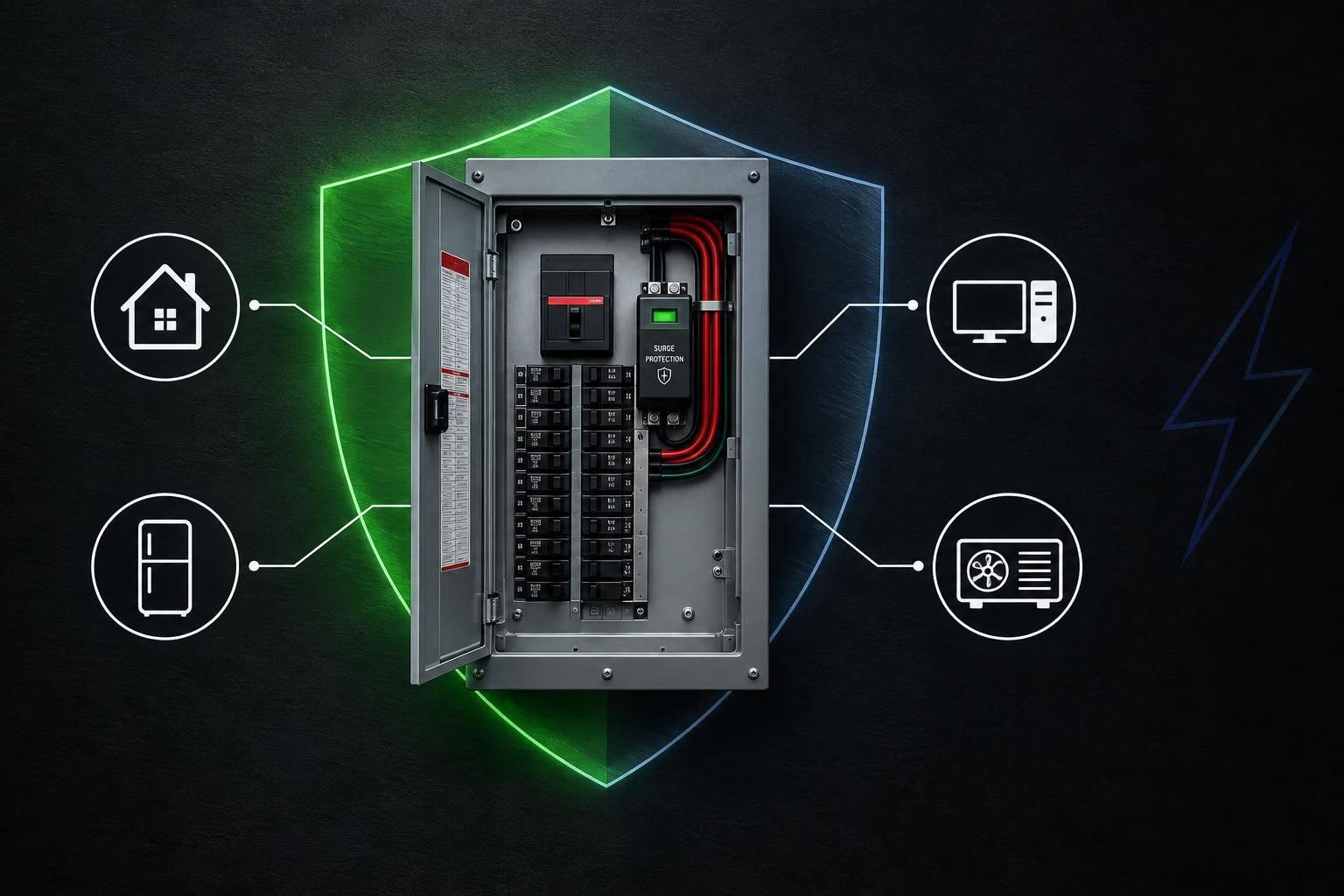
My take: whole-home surge protection can be worth the cost if you have expensive appliances or frequent power disturbances. Before buying, I’d get an itemized quote in CAD and have an electrician check the panel, grounding and bonding.
Here’s what I’d weigh:
For an Ottawa Valley home, I’d compare the installed price with replacement costs and possible downtime – not expect <u>complete protection</u>.
How Whole-Home Surge Protection Works
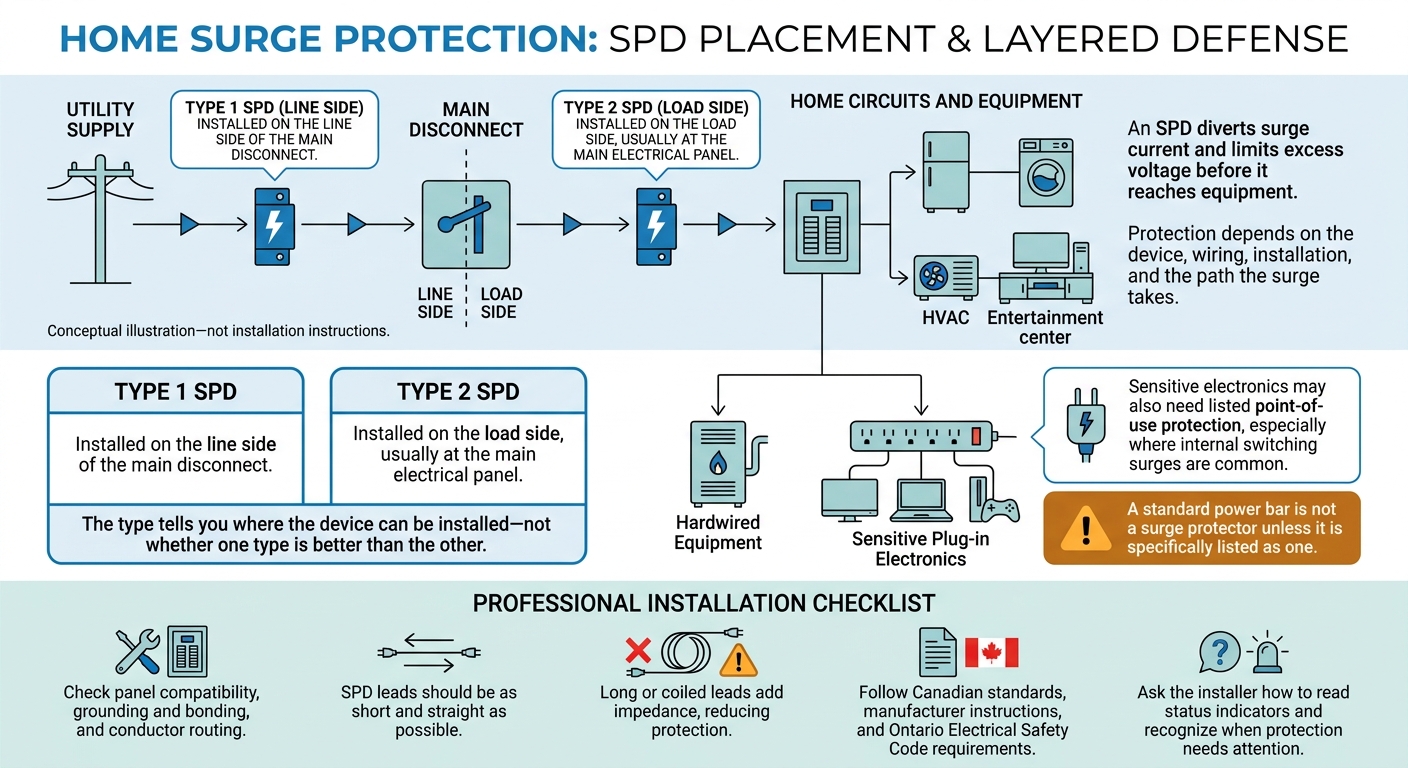
Once grounding, bonding, and panel compatibility are verified, a permanently connected surge protective device (SPD) can work more effectively. It diverts surge current and limits excess voltage before it reaches equipment. How well it works depends on the device, wiring, installation, and the path the surge takes.
Type 1 SPDs are installed on the line side of the main disconnect. Type 2 SPDs are installed on the load side, usually at the main electrical panel. The type tells you where the device can be installed – not whether one type is better than the other.
Placement matters, but wiring affects protection, too.
A licensed electrician should check panel compatibility, grounding and bonding, and conductor routing before installation. SPD leads should be as short and straight as possible. Long or coiled leads add impedance, reducing protection.
Installation must meet Canadian standards, manufacturer instructions, and Ontario Electrical Safety Code requirements. Ask the installer to explain the device’s status indicators and how to tell when protection needs attention.
Sensitive electronics may also need listed point-of-use protection, especially where internal switching surges are common. A standard power bar is not a surge protector unless it is specifically listed as one.
Whole-home surge protection reduces risk; it doesn’t eliminate it. It adds a useful second layer of defence, but it isn’t a complete shield. Here’s where it helps – and where its protection has limits.
| Benefit | Limit |
|---|---|
| Coverage: Helps protect circuits and hard-wired equipment from surges. | Protection depends on the device’s rating, placement, and wiring. |
| Risk reduction: Can reduce damage from common surges, including storm-related events. | Damage is still possible, especially from a direct lightning strike. |
| Layered protection: Works alongside point-of-use surge protection. | Sensitive electronics may still need point-of-use protection. |
| Maintenance: Many devices include protection-status indicators or failure alerts. | Check the status indicator, and replace the SPD after a major surge if protection is lost. |
| Cost: May help avoid costly repairs or replacements. | Requires upfront spending; value depends on your equipment, surge exposure, and electrical conditions. |
Treat the surge protective device (SPD) as equipment to monitor, not something to install and forget. Your power can stay on even after the SPD has lost protection.
If whole-home surge protection suits your property, weigh the installed cost against the cost of replacing at-risk equipment and the downtime a surge could cause.
Consider it for homes exposed to frequent lightning or recurring utility disturbances, especially those with costly heat pumps, security systems, or home-office equipment. A panel upgrade is also a good time to add protection.
Have outages and persistent voltage problems assessed first. A surge protective device (SPD) provides no backup power and cannot fix sustained voltage problems.
The price depends on the SPD model, panel compatibility, installation complexity, and any corrections needed. Ask the electrician to check older wiring, the panel’s condition, and any generator or transfer-switch connections.
Request an itemized quote in CAD that covers the device, labour, corrections, and required notification or inspection fees. Review warranty exclusions, replacement terms, and future replacement costs, too.
If the quote looks reasonable, book an assessment to confirm compatibility and installation requirements.
Contact Draper Electric to arrange a home electrical assessment and SPD installation that meets Ontario Electrical Safety Code requirements.
For most homes, choose a Type 2 surge protection device (SPD) rated for 120/240 V. Look for at least 2,000 joules – or 4,000+ joules for higher demands or frequent lightning – a nominal discharge current (In) of at least 10 kA, and a clamping voltage around 330 V.
Choose a maximum continuous operating voltage (MCOV) of at least 115% of nominal voltage and a short-circuit current rating (SCCR) suited to your panel. Higher kA ratings indicate longer life, not necessarily better protection.
Every three months, check your surge protector’s indicator lights for status signals. Look for physical damage, loose connections or corrosion. Once a year, have an electrician check its performance and connections, along with your home’s grounding system.
Replace your surge protector every three to five years, or immediately after a major electrical surge. Its internal components wear down over time – even if the device still appears to work.
An SPD at your main electrical panel helps protect the circuits connected to it. A detached garage typically has its own subpanel, fed by the main service, so don’t rely on the main-panel SPD alone to protect devices in the garage.
For protection at the garage’s distribution point, have a separate SPD installed at its subpanel. This layered approach adds protection at both panels.