Electrical Products & Services
Regular electrical maintenance—inspections, thermal scans, and timely repairs—cuts outages, protects equipment and reduces costly downtime.
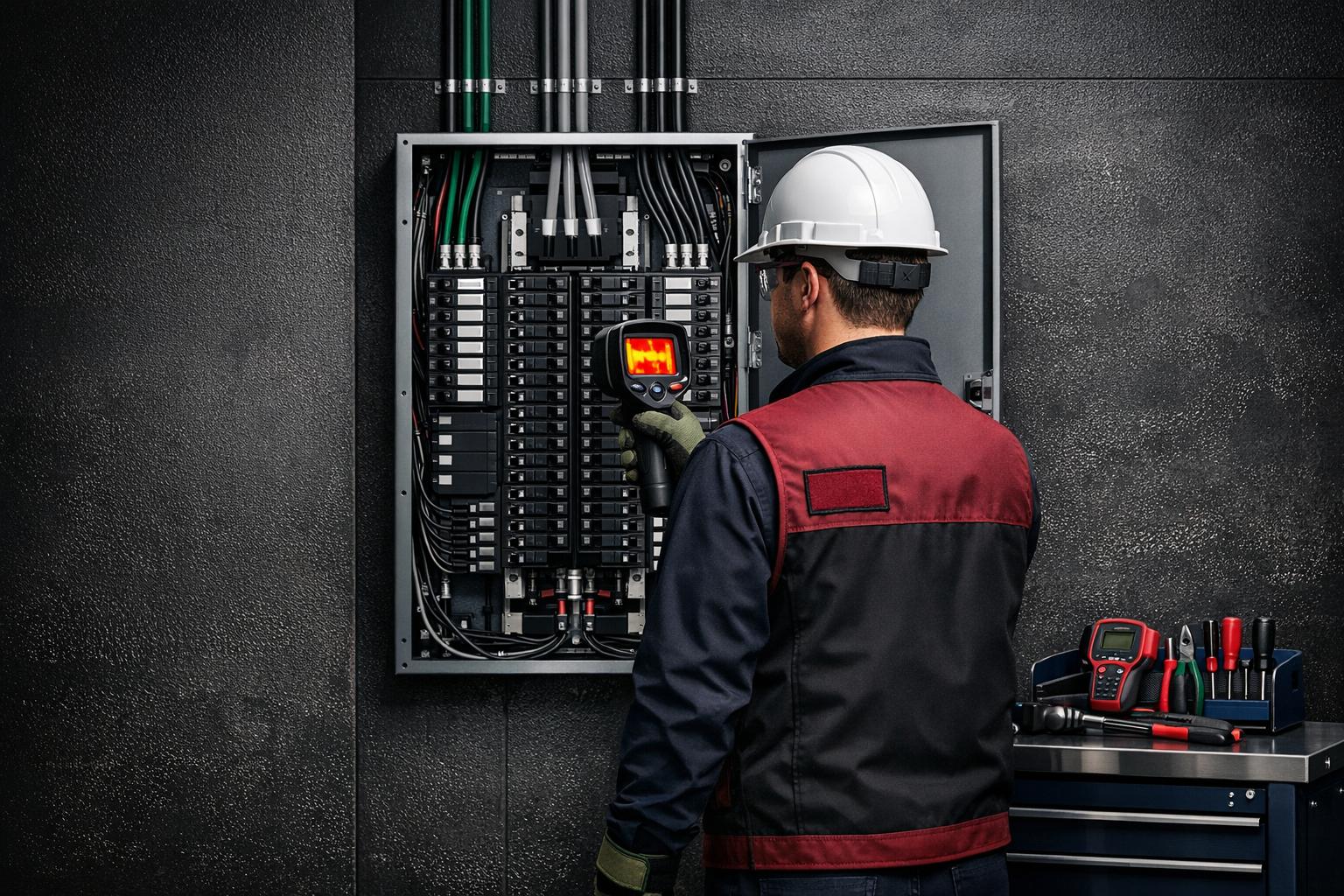
Electrical downtime can cost businesses thousands of dollars per day, but regular maintenance can significantly reduce these risks. By addressing small issues like loose connections, aging equipment, and dust buildup, businesses can avoid costly disruptions, equipment damage, and revenue loss.
Key highlights:
Routine inspections and upgrades also ensure compliance with insurance requirements and prepare businesses for future needs, such as higher electrical loads or backup power systems. Proactive care saves money, protects equipment, and ensures uninterrupted operations.
Electrical failures rarely occur without some kind of warning. As Zeus Electric explains:
"Electrical systems gradually decline before failing. Loose connections, aging wiring, and overloaded circuits usually give subtle signals long before a serious outage or fire occurs."
The problem? These signals can be so subtle that they often go unnoticed unless you’re specifically looking for them. This is why regular maintenance is essential – it helps catch these issues before they snowball into costly downtime. Here are some of the most common problems that highlight the importance of staying proactive.
Every time electrical components power on and off, they go through thermal cycling – a process where parts expand and contract due to heat. Over time, this natural wear loosens bolted connections and terminal screws. Add in vibrations from nearby machinery, and the process speeds up even more.
But a loose connection isn’t just an annoyance. It creates electrical resistance, which generates heat. If left unchecked, this heat can lead to arcing – essentially tiny electrical sparks that can ignite insulation or trip breakers unexpectedly. According to OxMaint, "a single loose lug at 200A generates enough heat to ignite surrounding insulation." Alarmingly, about 25% of electrical fires in commercial settings are traced back to wiring issues or overloaded connections that often gave no obvious signs beforehand. On top of that, as equipment ages, it becomes even more prone to these failures.
Electrical panels in commercial buildings are designed to last anywhere from 25 to 40 years. However, even the best-made equipment deteriorates over time. Circuit breakers, for instance, wear down every time they interrupt a fault. Tests show that 15% to 25% of breakers older than 10 years fail to trip properly when needed.
Similarly, conductor insulation begins to degrade due to prolonged exposure to heat and moisture, increasing the risk of short circuits. The challenge is that much of this wear isn’t visible. A breaker might look fine on the surface but fail to trip during an overload, leaving your system vulnerable to severe damage. Environmental conditions, like humidity and temperature changes, only make these risks worse.
Electrical panels located in basements, garages, or near HVAC systems are particularly prone to environmental damage. Dust can accumulate inside enclosures, trapping heat. If that dust contains metallic particles or absorbs moisture, it can create conductive paths, leading to arcing. Meanwhile, moisture alone can cause rust and oxidation on bus bars and terminals, which increases resistance. This extra resistance generates more heat, accelerating corrosion in a vicious cycle that eventually leads to failure.
Seasonal weather in the Ottawa Valley makes these problems even more pronounced. High humidity in the summer and sharp temperature swings between seasons intensify thermal cycling and increase the likelihood of moisture intrusion. These conditions make regular inspections even more critical to avoid unexpected downtime.
Now that you understand the causes of electrical failures, taking steps to prevent them is the smart next move. Regular maintenance – spanning inspections, diagnostics, and timely repairs – helps keep your commercial electrical systems running smoothly and safely.
Spotting problems early often starts with a simple visual inspection. A trained technician will look for scorch marks, corroded terminals, damaged insulation, or signs of moisture inside enclosures – clear indicators that something’s wrong.
But inspecting isn’t enough. Cleaning is just as critical. Dust and debris inside panels trap heat and can lead to electrical tracking, where electricity arcs across a contaminated surface. This can cause serious damage. By keeping electrical rooms clean, dry, and free of clutter, businesses can significantly lower their risk. Outdoor fixtures also need attention, especially before winter. Moisture and freeze-thaw cycles can speed up wear and tear, making regular upkeep even more important.
After visual checks, advanced diagnostic tools take over to uncover hidden issues.
While visual checks are helpful, they can miss hidden dangers. That’s where diagnostic tools come into play, offering a deeper level of analysis.
One standout method is infrared thermography (thermal scanning). Using a thermal camera, technicians can detect heat anomalies in live equipment like overloaded breakers, loose connections, or phase imbalances – all without shutting the system down. According to Dynamic Thermal Imaging, "studies by the Electrical Safety Foundation International (ESFI) estimate that up to 80% of electrical failures provide advance thermal warning – detectable weeks or months before the failure occurs." On average, a thermal scan reveals five to eight hidden faults. For accurate results, equipment should operate at least 40% of its rated load during the scan.
Other diagnostic methods, like insulation resistance and breaker trip tests, verify whether insulation and safety devices are still doing their job. These tests are especially crucial for older buildings. Skipping these steps could mean missing the chance to address an issue before it turns into a costly failure.
Once problems are identified, acting on them quickly is key.
Identifying a problem is only part of the solution – taking action promptly is what prevents downtime. Preventive maintenance is not only less expensive than emergency repairs, but it also avoids disruptions to productivity.
Small issues, like flickering lights or a faint buzzing sound, often signal bigger problems, such as loose connections or failing components. Routine tasks like torque verification – tightening terminals and connections to manufacturer specifications – help counteract loosening caused by thermal cycling and vibration. Replacing aging breakers or emergency lighting batteries before they fail ensures your system stays reliable, avoiding the chaos of unexpected shutdowns. Keeping detailed service logs also simplifies future inspections and supports insurance compliance.
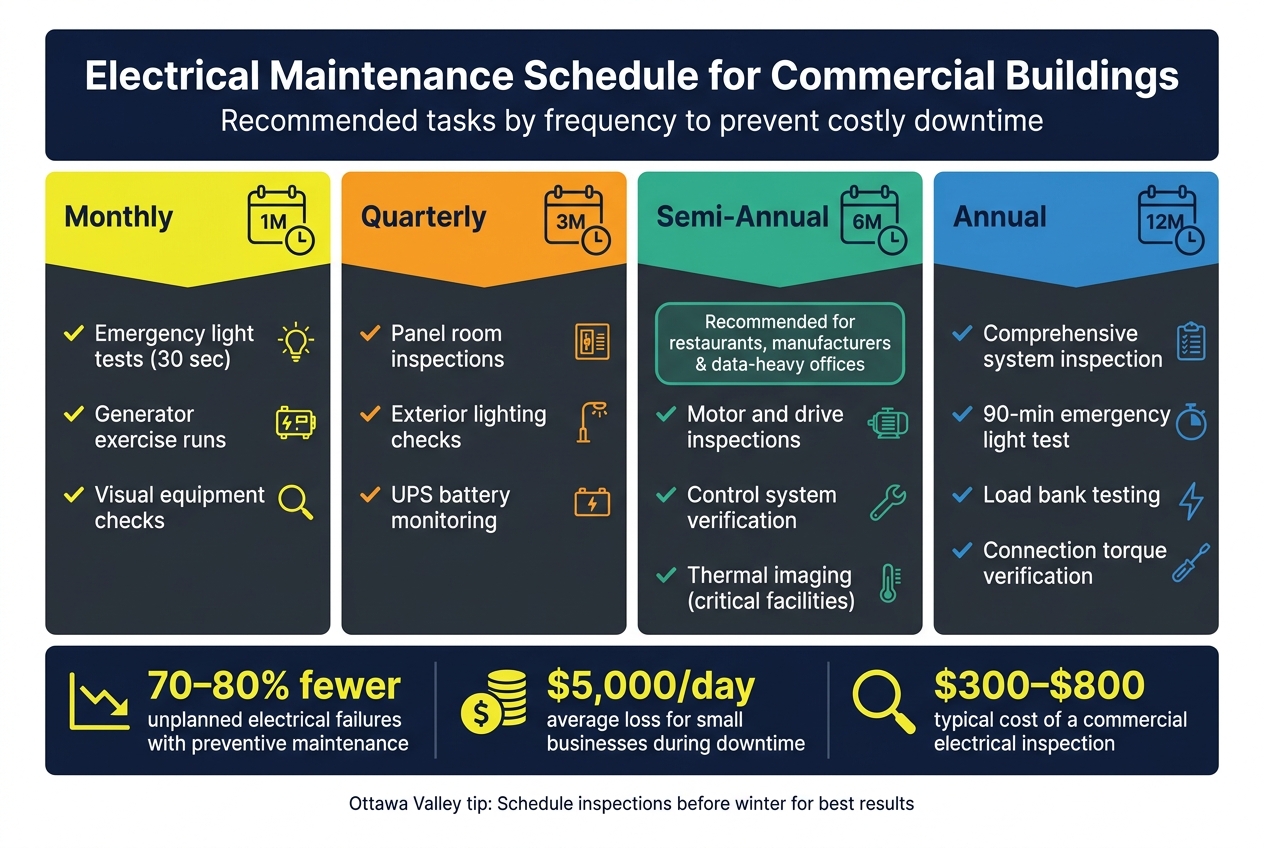
Electrical Maintenance Frequency & Tasks: A Business Guide
Avoiding expensive electrical downtime starts with a proactive maintenance program. It’s not just about spotting and fixing issues as they arise – it’s about creating a structured plan to keep your electrical systems running smoothly.
The foundation of any maintenance program is a detailed record of your electrical assets. Begin by compiling an inventory that includes key details like equipment age, capacity, manufacturer, and current condition. With this in hand, conduct a criticality assessment to prioritize your efforts. Not all equipment poses the same level of risk – a failed life-safety system or distribution panel can cause far more disruption than a minor outlet circuit.
Once your priorities are clear, the program should include regular tasks like visual inspections, thermal scanning, load testing, breaker checks, torque verification, and thorough documentation after each visit.
"A maintenance plan costing a few thousand dollars a year protects assets worth millions." – AJ Long Electric
The frequency of maintenance depends on factors like building size, equipment age, how heavily systems are used, and environmental conditions. For most commercial properties, annual checks are sufficient. However, businesses with higher electrical demands – such as restaurants, manufacturing plants, or data-heavy offices – should schedule inspections twice a year.
| Frequency | Recommended Tasks |
|---|---|
| Monthly | Emergency light tests (30 sec), generator exercise runs, visual equipment checks |
| Quarterly | Panel room inspections, exterior lighting checks, UPS battery monitoring |
| Semi-Annual | Motor and drive inspections, control system verification, thermal imaging for critical facilities |
| Annual | Comprehensive system inspection, 90-min emergency light test, load bank testing, connection torque verification |
In the Ottawa Valley, scheduling an inspection before winter is especially important. Increased heating demands, unpredictable storms, and temperature fluctuations can all accelerate wear on electrical components. Older equipment, in particular, requires closer attention to avoid unexpected failures.
A clear schedule is essential, but working with experienced professionals ensures your maintenance program is both effective and thorough.
Putting together a maintenance program can be tough without the right expertise or tools. Equipment like thermal cameras, power quality analysers, and load testers aren’t typically part of a facility manager’s toolkit – and even if they were, interpreting the results requires specialized knowledge.
That’s where Draper Electric comes in. Serving businesses across the Ottawa Valley since 1993, Draper Electric is led by Randy Draper, a Master Electrician with over three decades of experience. Their team handles all aspects of commercial maintenance, including inspections, thermal scanning, breaker testing, panel servicing, and repairs. Every task is performed to ESA standards, with proper documentation to back it up. Whether your facility is in Arnprior, Kanata, Renfrew, or anywhere nearby, Draper Electric ensures your maintenance program is tailored to meet your specific needs.
A solid maintenance program doesn’t just protect your equipment – it helps keep your business running without interruption.
Preventive maintenance is essential, but adding strategic upgrades and reliable backup systems can further minimise downtime and ensure smooth operations.
Routine inspections do more than just identify issues – they also highlight when your electrical system is nearing its limits. Over time, as businesses expand and add equipment or workstations, circuits that once managed the load efficiently may begin to struggle. Signs like frequent breaker trips, unbalanced circuits, or overloaded panels often signal that an upgrade is needed.
One of the most common issues uncovered during inspections is an outdated electrical panel that can no longer meet current demands. Upgrading your panel and adding surge protection ensures your system can handle modern requirements. This is especially important for businesses planning to introduce high-demand equipment like EV charging stations, heat pumps, or additional production machinery.
While these upgrades improve overall performance, they don’t eliminate vulnerabilities to power outages caused by external factors. That’s where backup systems come into play.
Even the best-maintained electrical system can’t shield you from grid outages. Severe weather events in the Ottawa Valley have shown just how disruptive power failures can be. The 1998 Ice Storm left over 230,000 Ontarians without electricity, while the May 2022 derecho caused outages for about 180,000 customers, with some going nearly two weeks without power. For businesses that rely on uninterrupted electricity, having a backup power system is crucial.
Standby generators are a reliable solution, automatically restoring power to critical systems like HVAC, refrigeration, security, and communications. Unlike portable units, which require frequent refuelling, standby generators connected to natural gas or propane supplies can operate for days without intervention – an invaluable feature during extended outages.
"A backup generator is only useful if it starts when you need it." – Electricians Ottawa
This makes regular maintenance of the backup system itself just as important as having the generator. Many generator failures stem from preventable issues, such as a weak or dead battery – problems that a simple annual inspection can catch.
Draper Electric offers two dependable backup power solutions for homes and businesses in the Ottawa Valley: Champion home standby generators and GenerLink transfer switches.
Champion standby generators come in a range of capacities, from 8.5 kW units designed for essential circuits to 22 kW systems capable of powering an entire facility, including air conditioning and well pumps. Prices for these units start at $3,299.00, with complete installations (including the generator, site preparation, and gas hookup) typically costing between $6,800 and $12,000+.
For businesses already using portable generators, the GenerLink meter-mounted transfer switch offers a safer and code-compliant way to connect to the main panel without risking backfeeding. These switches range in price from $1,650.00 to $2,449.99, depending on amperage, with some models featuring built-in surge protection.
Draper Electric handles all aspects of installation, including the required ESA notification and transfer device setup. To keep these systems running smoothly, annual maintenance is key. Costs for servicing standby generators range from $200 to $500 – a small price compared to the $500–$2,500+ that major repairs due to neglect can cost. Scheduling maintenance in early fall, such as September or October, ensures your system is ready before winter storms roll in. Regular upkeep is essential to maintain reliability and avoid unexpected failures.
Electrical downtime can hit Canadian small businesses hard – averaging $5,000 per day in losses. But these costs can often be avoided with preventive maintenance. Small issues like loose connections, outdated panels, dust buildup, moisture, or system overloads can snowball into major failures if left unchecked. Regular maintenance acts as a safeguard, reducing the risk of unexpected and expensive downtime.
Businesses with preventive maintenance programs see 70% to 80% fewer unplanned electrical failures compared to those that wait for something to break. This highlights the importance of staying ahead of potential problems. Services like annual inspections, thermal imaging, load balancing, and timely repairs ensure your system performs reliably – even during Ottawa Valley’s unpredictable weather. The cost? Commercial inspections typically range from $300 to $800, which is a fraction of what emergency repairs could cost. For high-demand environments like restaurants or manufacturing facilities, semi-annual checks are a smart move.
"In emergencies, timing is everything. A professional electrician can be the difference between minor hiccups and a financial disaster." – Ryan Hayes, Ottawa Business Consultant
The numbers and expert advice make it clear: routine inspections are well worth the investment. Why wait for a problem to arise? Schedule a professional electrical inspection today. Draper Electric has been a trusted partner for Ottawa Valley businesses since 1993. Led by Master Electrician Randy Draper, who boasts over 30 years of experience, their team handles everything from routine inspections and panel upgrades to full backup power installations – all while ensuring compliance with ESA permits. Don’t let minor issues turn into major shutdowns – get in touch now.
Electrical problems often give subtle hints before they escalate into major issues. Keep an eye out for these red flags:
If you notice any of these issues, it’s time to call in the professionals at Draper Electric. Addressing these warning signs early can help prevent costly downtime and ensure your system stays safe and reliable.
The maintenance schedule that works best for your building depends on several factors, including its age, electrical load, and the nature of its operations. For most commercial properties, annual inspections are usually sufficient. However, environments with higher electrical demands – like restaurants or manufacturing facilities – should aim for servicing at least twice a year. Older buildings or those with intricate electrical systems might require even more frequent attention.
Draper Electric provides professional maintenance services throughout the Ottawa Valley, ensuring your business stays safe, compliant, and operates without interruptions.
Yes, getting a thermal scan is worth it, even if everything appears to be running smoothly. Electrical problems often start silently, creating excess heat well before they lead to breakdowns or potential fires. Thermal scans can uncover hidden issues like loose connections, overloaded circuits, or failing breakers – all without interrupting your operations. Draper Electric helps businesses identify these problems early, saving money on repairs and meeting insurance compliance requirements.