Electrical Products & Services
Estimate the generator size your home needs by adding up appliance wattage, surge buffer, and custom loads in a few quick steps.
A Home Generator Wattage Calculator helps take the guesswork out of choosing backup power. Instead of estimating blindly, you can add up the appliances and devices you actually want to run during an outage and see how much power they’ll need together. That’s especially useful for homeowners comparing portable units with larger standby systems.
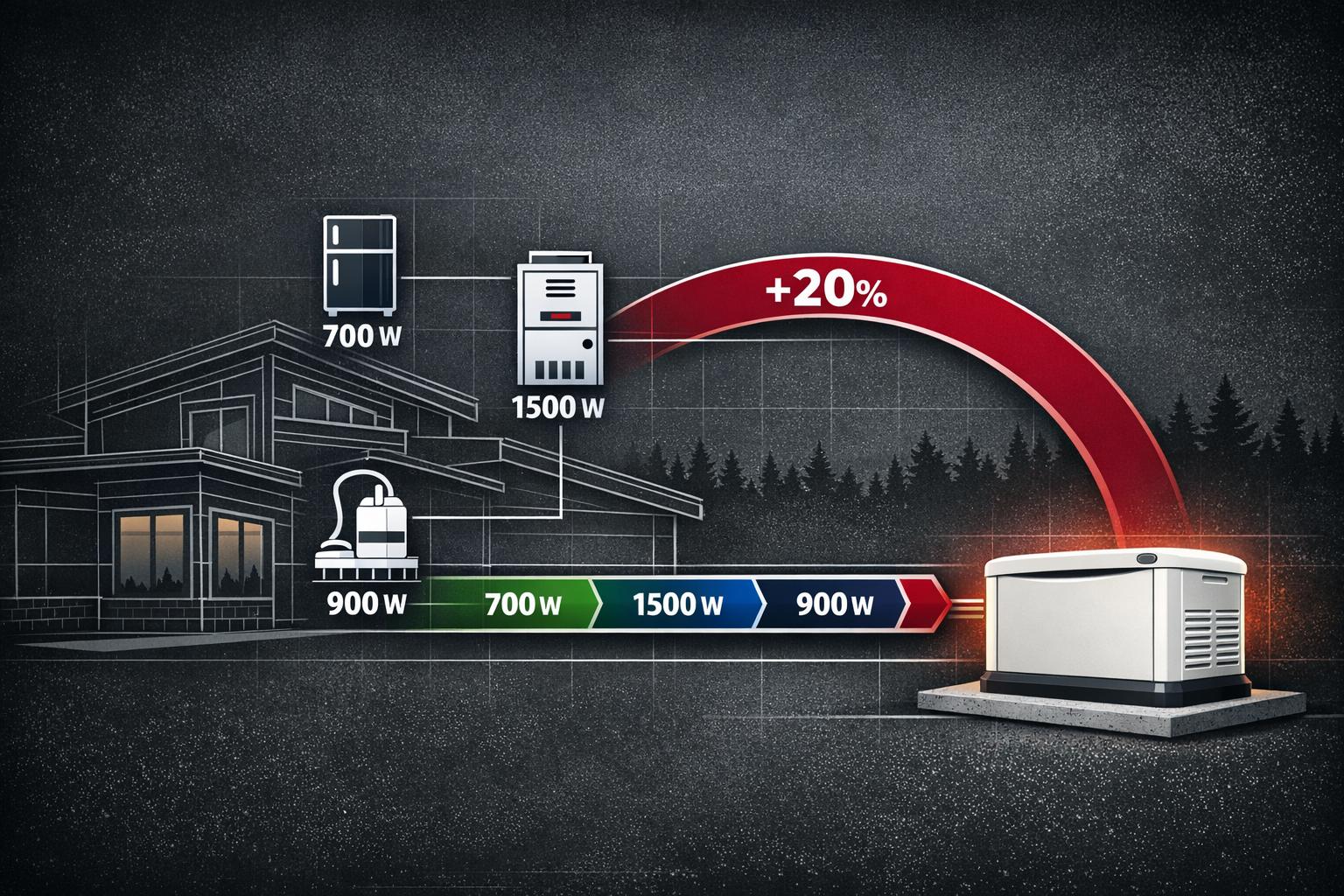
Every appliance draws a different amount of electricity. A refrigerator, microwave, furnace fan, sump pump, and air conditioner all place different demands on a generator, and some need extra power when they start. A good home generator wattage calculator accounts for those loads, adds a safety margin, and gives you a more realistic target for generator sizing.
This tool is useful whether you’re preparing for storms, planning emergency backup, or checking if your current setup is enough. By combining standard appliance wattage with custom entries, it gives you a flexible way to estimate household power needs without overcomplicating the process. If you’re comparing generator capacity for a house, cottage, or essential-circuits setup, this kind of calculator is a practical first step before making a purchase or speaking with an installer.
It’s a solid planning estimate based on realistic, commonly used wattage values for household appliances. That said, actual power draw can vary by model, age, efficiency rating, and whether a device has a high startup surge. If you’re sizing a generator for your whole home, a well pump, central air, or sensitive electrical systems, it’s smart to confirm the numbers from appliance labels or speak with a licensed electrician.
Many appliances need extra power for a few seconds when they start up, especially anything with a motor or compressor, like refrigerators, freezers, pumps, and air conditioners. The 20% buffer helps account for that surge so your generator recommendation is more practical than a simple wattage total. It’s a helpful cushion for real-world use, though some equipment may need even more starting capacity.
There isn’t one answer for every home because it depends on what you want to keep running during an outage. A smaller portable unit may handle essentials like a fridge, lights, internet, and a few outlets, while a larger standby generator may be needed for electric heat, central AC, water pumps, or broader whole-home backup. This calculator helps narrow the range by turning your selected loads into a usable wattage target.