Electrical Products & Services
Estimate the right generator size for outages by adding appliance running and starting watts. Get a practical kW recommendation in seconds.
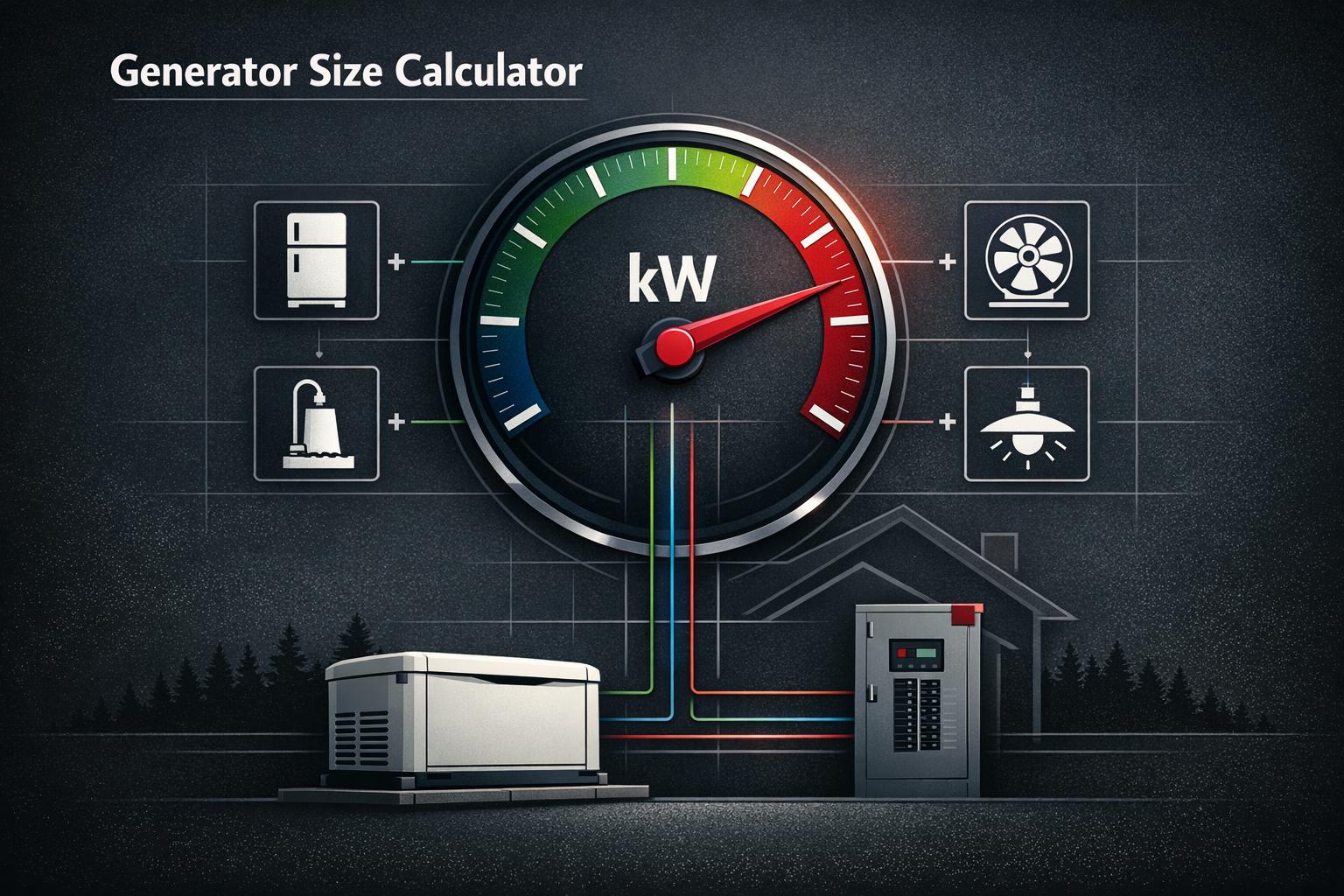
Picking backup power shouldn’t feel like guesswork. A Generator Size Calculator helps you estimate how much power you actually need during an outage by looking at two key numbers: running watts and starting watts. Running watts cover the steady demand from lights, appliances, and electronics, while starting watts matter for equipment with motors, such as refrigerators, freezers, sump pumps, and furnaces.
Many people underestimate generator needs because they focus only on continuous use. The bigger issue is often the brief surge required when a motor starts. A solid Generator Size Calculator adds all running loads, then factors in the highest startup requirement to produce a more realistic estimate.
Using a generator sizing tool can help you compare essential circuits, avoid overloading a unit, and shop with more confidence. It’s also useful if you want to prioritize key household systems instead of powering everything at once. For the best results, gather appliance labels or owner manuals before entering wattage figures. Once you have an estimate, use the recommended kilowatt range as a planning guide and consult a qualified professional for installation, transfer equipment, fuel setup, and local safety requirements.
Most household appliances do not hit their startup surge at the exact same moment. In many backup power scenarios, the safer and more realistic approach is to add your total running watts and then account for the single highest starting load. That gives you a solid estimate for generator sizing without overstating your needs. If you expect several large motor-driven loads to start at once, it’s smart to treat that as a special case and confirm the setup with an electrician or generator installer.
Running watts are the power an appliance needs to keep operating normally. Starting watts are the temporary extra watts some equipment needs for a few seconds when it first turns on, especially anything with a motor, compressor, or pump. Refrigerators, sump pumps, furnaces, and air conditioners often have this startup surge. If you size a generator using only running watts, it may struggle when those items kick on.
A 10-20% buffer is a practical range for most homeowners because it gives you some breathing room for startup variation, future loads, and real-world operating conditions. If you’re only powering a few essentials, 10% may be enough. If your list includes more motor-driven equipment or you want a little extra flexibility, 20% is often the better choice. For permanent standby systems, transfer switches, or whole-home setups, professional guidance is strongly recommended.