Electrical Products & Services
Ontario's demand response programs offer cash incentives and tech rebates to cut peak load, lower bills and reduce emissions.
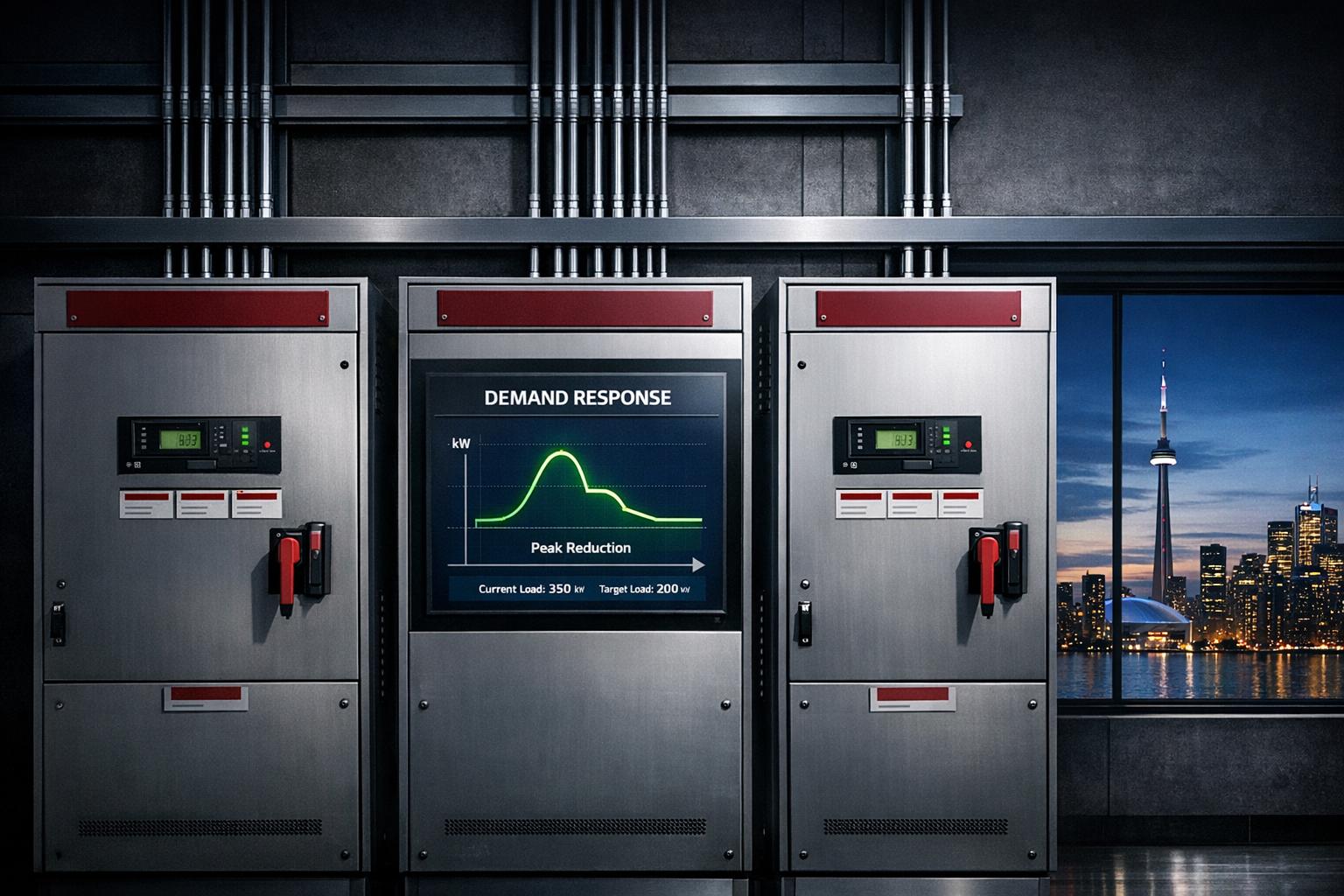
Ontario is tackling rising electricity demand with demand response (DR) programs that help reduce energy use during peak times. Instead of costly new infrastructure, these programs offer financial incentives to encourage homeowners, businesses, and industries to adjust their energy consumption. Here’s what you need to know:
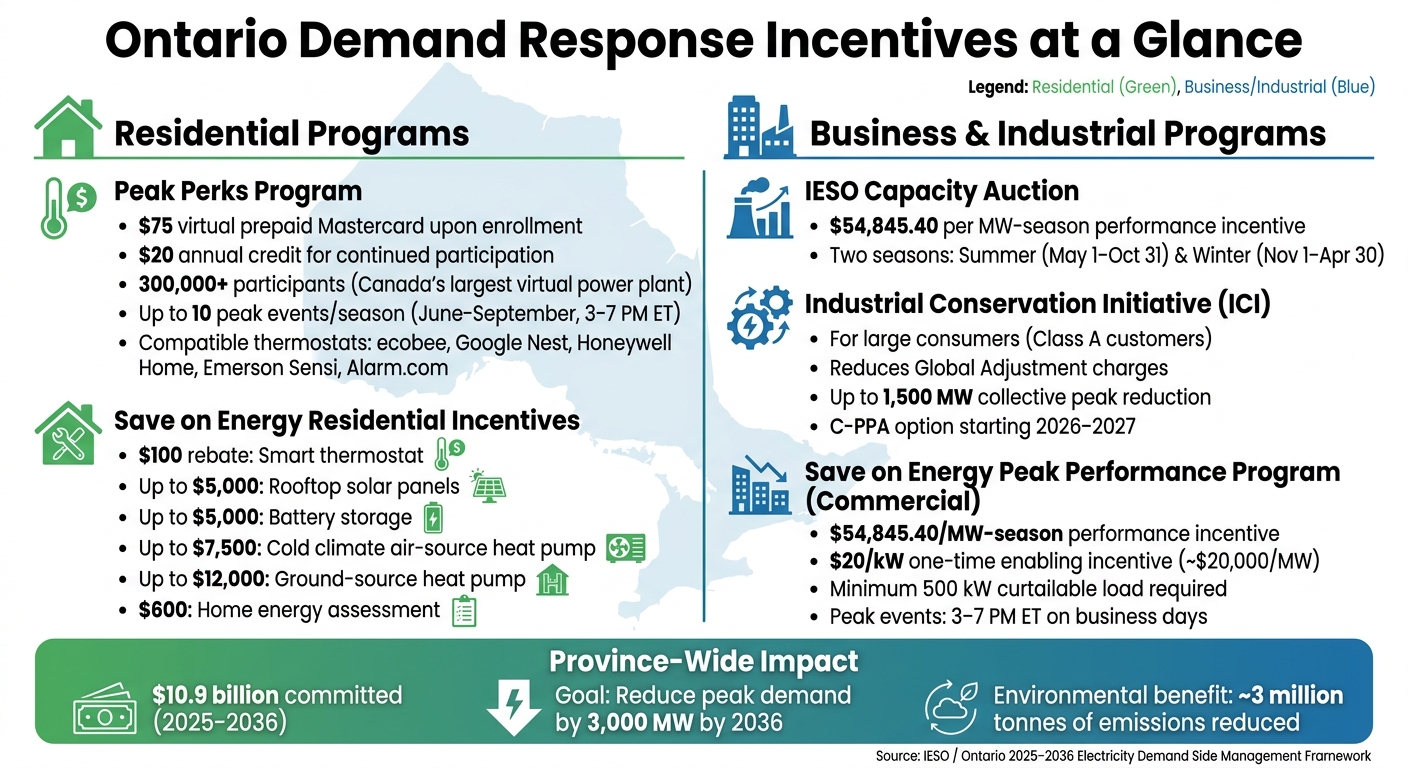
Ontario Demand Response Incentives: Residential vs. Business Programs
Demand response (DR) is a straightforward approach to managing electricity demand. It encourages customers – whether residential, commercial, or industrial – to reduce or adjust their energy usage during times when the grid is under heavy stress. Instead of ramping up electricity production to meet surging demand, the Independent Electricity System Operator (IESO) relies on DR to lower the overall energy required.
DR employs two main mechanisms: price-based and incentive-based. In price-based systems, higher electricity costs during peak periods encourage users to cut back. Incentive-based systems, on the other hand, reward participants for reducing their energy use. For instance, industrial facilities can lower their Global Adjustment charges by using less energy during peak times. Similarly, a commercial building might earn seasonal capacity payments for scaling back air conditioning during a summer peak event. Both methods achieve the same goal: easing the grid’s workload when it matters most.
How DR looks in action varies widely. A factory might shift energy-heavy operations to overnight hours. An office building could pre-cool its space before a peak period – often between 3:00 PM and 7:00 PM ET on summer weekdays – and then reduce HVAC usage during the peak window. These small, collective changes offer substantial relief to the grid.
Ontario has embraced DR as a practical solution to address its growing energy challenges. The province faces a pressing need to fill capacity gaps caused by nuclear facility closures and increasing electricity demand. For example, the retirement of the Pickering Nuclear Generating Station, combined with ongoing refurbishments at other nuclear plants, has created a shortfall in energy supply. At the same time, electrification is driving demand to new heights. Building new power plants or transmission infrastructure is both costly and time-intensive, whereas DR offers a quicker and more economical alternative.
The IESO highlights the importance of DR in their strategy:
"Investment in energy efficiency through demand side management is an essential component of electricity resource procurement; and plays a unique role in ensuring a reliable, affordable, and sustainable grid now and into the future." – IESO
DR also plays a crucial role in reducing environmental impacts. By decreasing reliance on natural gas peaker plants during high-demand periods, DR helps cut greenhouse gas emissions. Ontario’s demand-side programs are expected to reduce emissions by approximately 3 million tonnes over the lifespan of these initiatives, aligning with the province’s broader goals to lower carbon output. For participants, the benefits are even more immediate: reduced electricity costs and, in many cases, direct financial rewards for participating in DR programs.
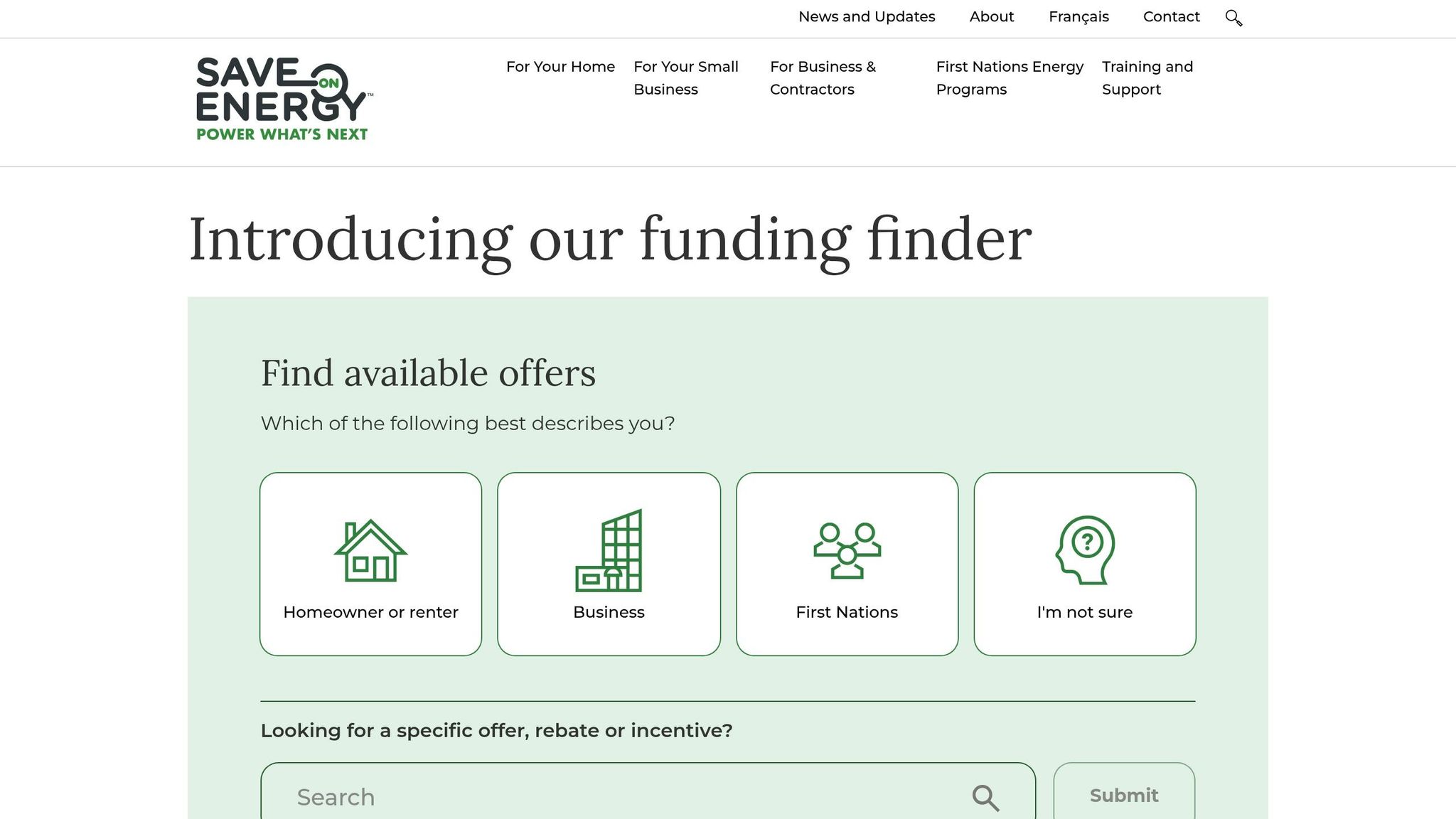
Ontario businesses have access to several programs that turn demand response into financial savings. Whether you manage a mid-sized commercial property or a large industrial operation, there’s likely an option that suits your needs. Below are some of the key programs available.
The Capacity Auction, previously known as the Demand Response Auction, is the Independent Electricity System Operator’s (IESO) primary tool for securing short-term electricity capacity. This updated name reflects the inclusion of various resource types like energy storage and imports, alongside demand response.
Participating businesses commit to cutting electricity use during high-demand periods with little notice. In return, they earn availability payments based on the auction’s clearing price. For 2026, the performance incentive rate is $54,845.40 per MW-season. The auction operates in two six-month periods: Summer (May 1 to October 31) and Winter (November 1 to April 30). The most recent auction, held on November 26–27, 2025, secured capacity for Summer 2026 and Winter 2026/27.
Interested businesses can find more details in the IESO Market Rules and Capacity Auction Rules Library. IESO also provides eLearning modules, which can be accessed by emailing customer.relations@ieso.ca. However, businesses should note that they cannot hold a Capacity Auction obligation and participate in the Save on Energy Peak Performance Program in the same season.
The Industrial Conservation Initiative (ICI) is tailored for large electricity consumers (Class A customers) who can reduce their demand during the five highest peak hours of the year. By doing so, they lower their share of the Global Adjustment (GA), which is a major cost component of electricity bills for large users.
"Through ICI, participating customers are rewarded for shifting their energy use away from high demand periods." – IESO
ICI participation can collectively reduce Ontario’s peak demand by up to 1,500 MW. Starting in the 2026–2027 base period, participants can also enter into Corporate Power Purchase Agreements (C-PPAs) with renewable energy generators. These agreements allow the generator’s output to offset the participant’s demand during peak periods, reducing GA charges without requiring operational curtailment. For those interested, the submission window for the pre-base period runs from February 1 to March 30. Submitting early is recommended to handle any potential issues.
Commercial and institutional buildings – such as offices, retail spaces, hospitals, and universities – can benefit from the Save on Energy Peak Performance Program, which focuses on reducing HVAC loads during summer peak times.
"The commercial HVAC demand response program is a smart, practical solution that benefits both the electricity grid and commercial buildings." – Susan Allen, President and CEO, Building Owners and Managers Association (BOMA) of Greater Toronto
The program offers a performance incentive of $54,845.40/MW-season and a one-time enabling incentive of $20/kW to help offset equipment or setup costs. Eligible buildings must be Class B customers (not enrolled in ICI), must not hold a Capacity Auction obligation, and must have at least 500 kW of curtailable load – with at least 75% of that coming from HVAC systems. Smaller buildings can join through an authorized aggregator if they don’t meet the 500 kW threshold alone.
Peak events typically occur on business days between 3:00 p.m. and 7:00 p.m. ET, last up to three hours, and include day-ahead standby notices and same-day activation alerts by 12:00 p.m. ET. Applications submitted by May 30 qualify for full seasonal incentives, while later submissions are prorated.
Ontario homeowners have the chance to save money and support energy efficiency through two major demand response initiatives: Peak Perks and Save on Energy Residential Incentives. Here’s a closer look at how these programs work and their benefits.
The Peak Perks Program has become Canada’s largest virtual power plant, with over 300,000 participants. It works by automatically adjusting your smart thermostat by 2°C during peak summer hours. On non-holiday weekdays from June to September, participants may experience up to 10 peak events per season, each lasting no more than three hours. If needed, you can opt out of an event by manually adjusting your thermostat or using your provider’s app.
When you enrol, you receive a $75 virtual prepaid Mastercard® and an additional $20 annually. These incentives are typically sent via email within 60 days, and the cards expire after six months. Eligible thermostats include models from ecobee, Google Nest, Honeywell Home, Emerson Sensi, and Alarm.com. Be sure to check your thermostat against the approved list before signing up.
"Participating in Peak Perks is an easy way to be rewarded for managing your electricity consumption and costs." – Save on Energy
Most Ontario residents, including renters and low-rise condo owners with dedicated air conditioning, are eligible. However, Cornwall residents, who are connected to the Hydro Quebec grid, are not. Hydro One customers can instead join the myEnergy Rewards program, which offers similar benefits. Keep in mind that you cannot participate in both programs at the same time.
In addition to smart thermostat programs, Ontario offers rebates for energy-efficient home upgrades. The Save on Energy Residential Incentives, starting in early 2025, provide rebates of up to 30% on eligible upgrades. Installing a smart thermostat as a standalone improvement qualifies for a $100 rebate, and no home energy assessment is required. For larger projects, the rebates can be substantial:
Additionally, a $600 rebate is available for a home energy assessment, which helps homeowners identify cost-effective upgrade options.
For lower-income households, the Energy Affordability Program (EAP) offers free energy-saving upgrades, including smart thermostats, at no cost to qualified participants. As Stephen Lecce, Ontario’s Minister of Energy and Electrification, explained, these initiatives aim to provide "families and small businesses more ways to save money as the demand for electricity continues to rise." These programs also contribute to Ontario’s goal of reducing peak electricity demand by 3,000 MW by 2036, demonstrating how small individual actions can lead to broader benefits for the province.
Take full advantage of Ontario’s demand response incentives by pairing them with smart electrical upgrades. Whether you’re a homeowner installing a heat pump or a business adopting a building automation system, choosing the right technology can improve energy management while helping you qualify for valuable incentives.
Not all electrical upgrades are created equal when it comes to demand response. Certain technologies, like building automation systems (BAS), smart thermostats, and battery storage, allow direct control over electricity use during peak demand periods. Here’s a breakdown of how these technologies support demand response and the incentives available:
| Technology | Role in Demand Response | Incentive |
|---|---|---|
| Building Automation Systems (BAS) | Automates HVAC and lighting adjustments during peak events | $20,000/MW (Enabling Incentive) |
| Sub-meters / Interval Meters | Provides 15-minute usage data for IESO verification | Included in Enabling Incentive |
| Smart Thermostats | Enables pre-cooling and remote control during peak hours | $75 enrollment (Peak Perks) |
| Battery Storage | Stores energy to reduce grid reliance during peak times | Up to $5,000 |
| Rooftop Solar | Generates behind-the-meter energy to offset peak demand | Up to $5,000 |
For commercial facilities, the IESO’s Peak Performance Program offers a one-time Enabling Incentive of $20,000 per MW of curtailed load. This can help offset the costs of equipment like BAS controllers and sub-meters. Pre-cooling is a common strategy for demand response: programming your BAS to cool the building heavily a few hours before the typical peak window (3:00–7:00 PM ET) allows you to bank thermal mass, keeping occupants comfortable while reducing HVAC loads during peak demand.
Commercial participants must provide 15-minute interval data with a gap-fill rate below 1% to qualify. Professional installation is equally essential to ensure the technology is set up correctly and meets program requirements.
Choosing the right technology is only half the equation – proper installation is just as important. For example, battery energy storage systems (BESS) must be installed by a licensed electrical contractor and approved through a Connection Agreement with your local distribution company, such as Hydro Ottawa.
"For battery storage (BESS), however, installation must be performed by a licensed electrical contractor, and the system must receive a Connection Agreement from Hydro Ottawa." – Hydro Ottawa
A licensed contractor ensures compliance with regulations and helps you qualify for incentives by completing the necessary setup and documentation. To secure rebates, ensure all invoices, installation records, and commissioning documents are submitted by 1 October 2026.
If you’re in the Ottawa Valley, Draper Electric offers professional installation services that meet demand response program requirements. From panel upgrades to EV charging stations and generator setups, they can support a comprehensive energy management strategy tailored to your needs.
Ontario’s demand response programs offer both immediate savings and long-term opportunities for homeowners and businesses. For residential participants, the Peak Perks program provides a $75 upfront bonus and a $20 annual credit for continued enrolment. On the commercial side, businesses that reduce energy use strategically can see significant returns – like earning approximately $75,000 in incentives for curtailing 1 MW during the 2026 season through the Peak Performance Program.
The 2025–2036 Electricity Demand Side Management Framework marks Ontario’s largest-ever commitment to demand-side management. This initiative highlights the importance of demand response technologies in creating a grid that’s reliable, affordable, and prepared for the future.
For industrial consumers, the Industrial Conservation Initiative (ICI) offers substantial savings on Global Adjustment charges for facilities that shift energy use during the province’s top five peak hours. Even facilities below the 500 kW threshold can access benefits by working with authorized aggregators to tap into commercial incentives.
To make the most of these programs, it’s essential to choose the right technology and ensure expert installation. If you’re in the Ottawa Valley, Draper Electric can help with everything from panel upgrades to EV charging and generator installations, making sure your setup qualifies for available incentives.
To qualify, your eligibility depends on your customer profile and the equipment you have.
For Peak Perks, you need to be a residential or small business electricity customer in Ontario (excluding Cornwall Electric). Additionally, you must have a Wi-Fi-enabled smart thermostat that controls either central air conditioning or a heat pump.
For myEnergy Rewards, eligibility requires being a Hydro One residential customer with a Wi-Fi-connected smart home device. You also need to reside in an eligible postal code.
Yes, Ontario homeowners can usually combine these incentives. For example, you can pair installation rebates – like those for heat pumps, solar panels, or battery storage – with demand response programs such as Peak Perks. Together, these programs help boost grid reliability while lowering energy costs. If you’re in the Ottawa Valley and need expert electrical services, Draper Electric provides professional assistance with installations and upgrades.
Yes, hiring a licensed electrical contractor is essential for installing demand response systems such as battery storage, solar panels, or advanced HVAC upgrades. A professional ensures the installation meets Ontario’s electrical codes, integrates seamlessly with your existing systems, and qualifies for government incentives. Draper Electric offers expert services across the Ottawa Valley, ensuring your energy-efficiency upgrades are installed safely and reliably.