Electrical Products & Services
How tamper‑resistant outlets use spring‑loaded shutters to block foreign objects, how they differ from GFCIs, Ontario rules, and when to replace outlets.
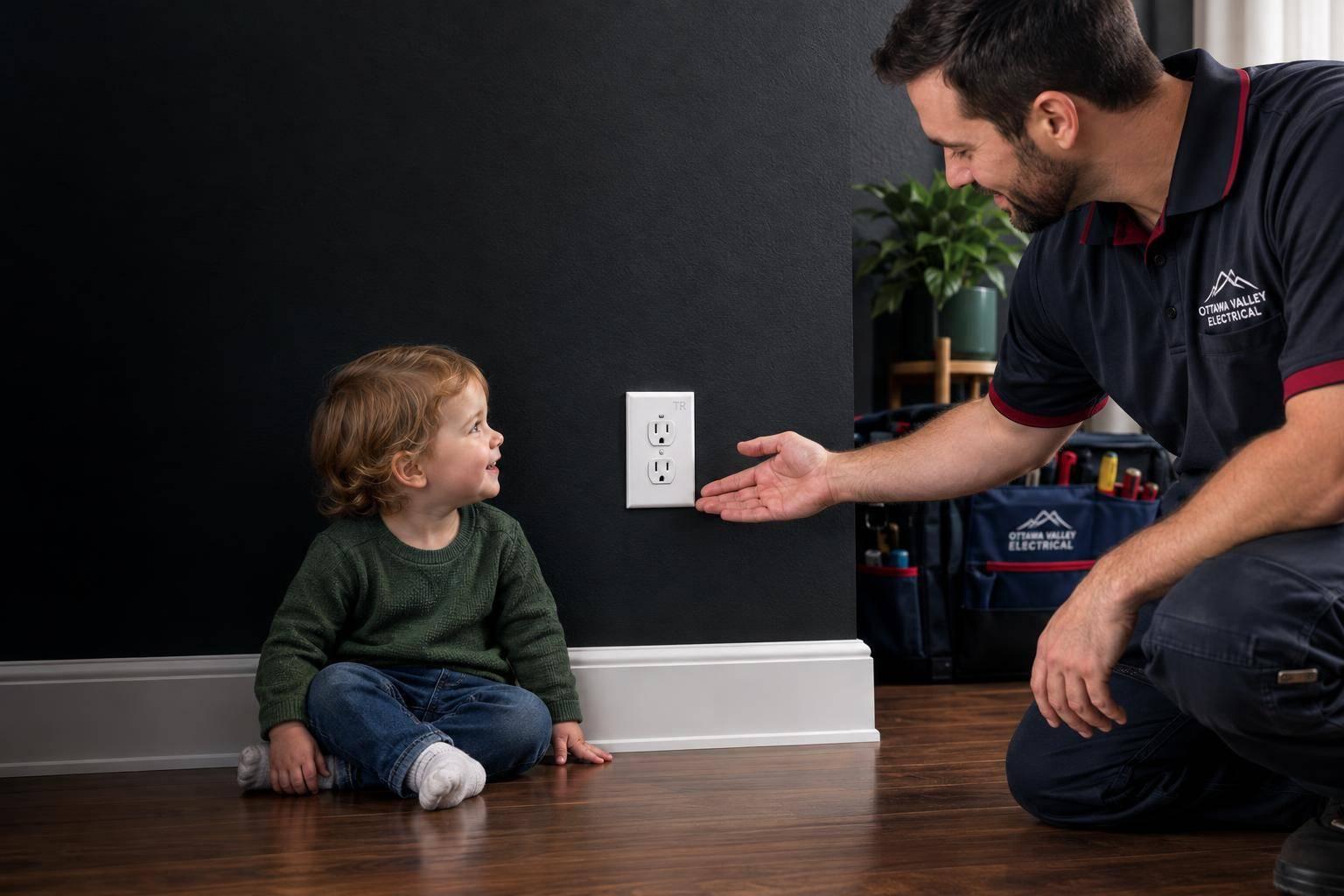
Tamper-resistant (TR) outlets help protect children by blocking objects pushed into a single slot. I recommend checking for the “TR” marking and having cracked, loose or unusually warm outlets assessed by a licensed electrical contractor.
Here’s what I’d keep in mind before an upgrade:
My bottom line: <u>TR outlets add protection, not a guarantee</u>. Keep supervising children, test GFCIs regularly and treat damaged outlets as a safety concern – not just an upgrade opportunity.
Tamper-Resistant Outlets vs. GFCI Protection
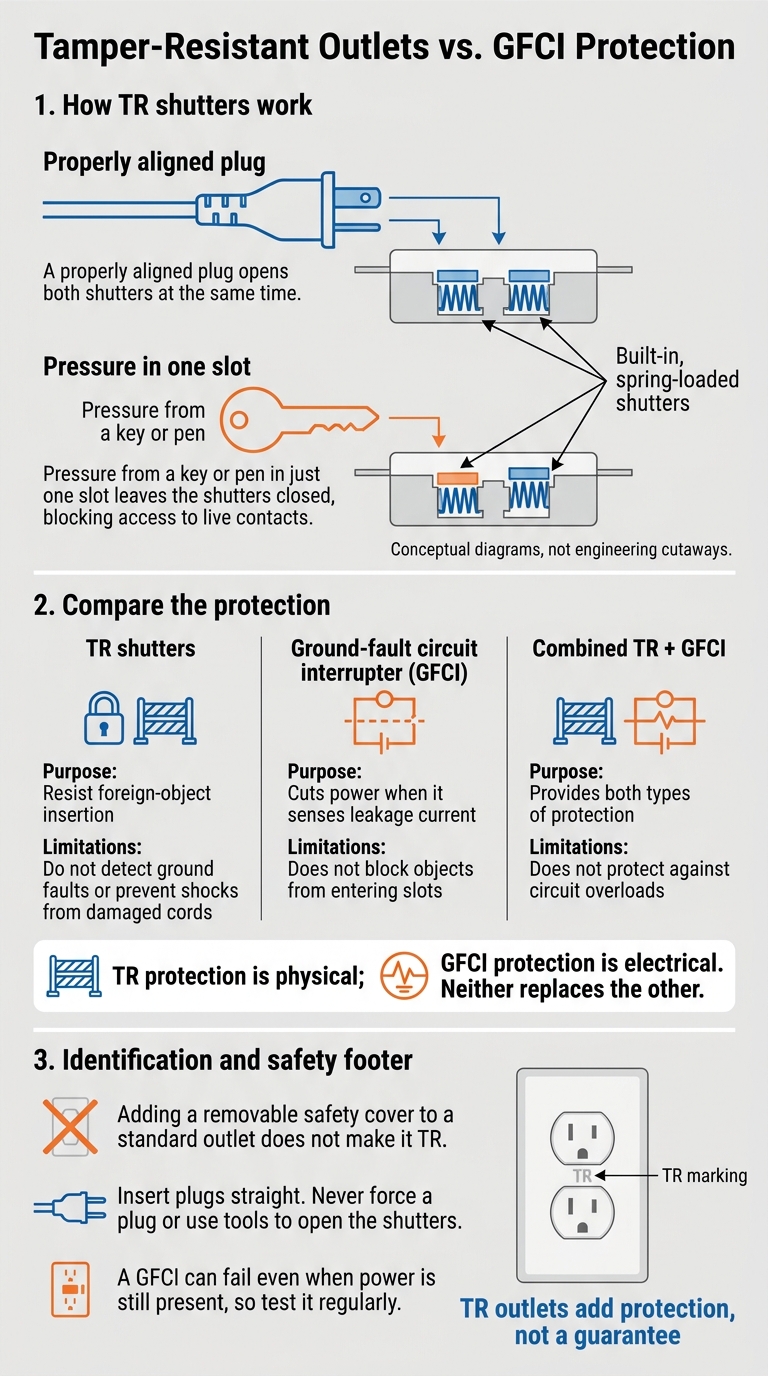
TR receptacles help protect children with built-in, spring-loaded shutters that block access to the live contacts inside the outlet. Adding a removable safety cover to a standard outlet does not make it TR.
A properly aligned plug opens both shutters at the same time. Pressure from a key or pen in just one slot leaves the shutters closed, blocking access to live contacts.
Insert plugs straight. Never force a plug or use tools to open the shutters.
You can tell the difference by checking the outlet’s shutters and markings.
| Feature | Standard receptacle | Tamper-resistant receptacle |
|---|---|---|
| Shutters | None | Built-in safety shutters |
| TR markings | None | “TR” on the device face |
| Single-slot resistance | No insertion barrier | Resists foreign-object insertion |
| Use where TR devices are required | Does not meet the TR requirement | Meets the TR requirement |
TR protection is physical; GFCI protection is electrical. Neither replaces the other.
| Protection | Purpose | Limitations |
|---|---|---|
| TR shutters | Resist foreign-object insertion | Do not detect ground faults or prevent shocks from damaged cords |
| Ground-fault circuit interrupter (GFCI) | Cuts power when it senses leakage current | Does not block objects from entering slots |
| Combined TR + GFCI | Provides both types of protection | Does not protect against circuit overloads |
Some kitchen, bathroom and outdoor locations require both GFCI protection and TR receptacles. Outdoor installations also need weather-resistant (WR) components and covers, including in-use covers where required.
A GFCI can fail even when power is still present, so test it regularly.
Ontario’s TR receptacle requirements depend on the occupancy, the receptacle location and the type of work. Follow the Ontario Electrical Safety Code in force when the work is done. Before installation, electricians check both the location and the occupancy to determine which requirements apply.
Have your electrician confirm the current ESA requirements before installing or replacing a receptacle. Commercial spaces also need a code check based on their occupancy.
Before an outdoor installation, have your electrician confirm which weather-resistant fittings and covers are required, along with any code exceptions that apply.
Knowing where TR receptacles are required helps you decide whether an older outlet can stay or needs replacing.
Age alone does not trigger a whole-home TR upgrade. But older outlets within a child’s reach deserve a safety check, even if you’re not renovating.
When planning electrical work, assess accessible outlets in the affected rooms. The work – not the room – determines which upgrades are required.
Here’s when outlets can generally stay and when they need an upgrade.
| Work being performed | Replacement or TR upgrade needed? |
|---|---|
| Undisturbed receptacles | Generally no code-required upgrade; assess for child safety and wear |
| Replacements | Use TR-rated receptacles where required |
| Additions to existing circuits | New outlets must be TR-rated where required |
| New branch circuits | Receptacles must meet current TR requirements |
| Branch-circuit wiring replacement | Receptacles must meet current TR requirements |
Give older non-TR outlets in children’s bedrooms and living areas priority if they show wear or looseness. Stop using an outlet immediately if it’s cracked, loose, discoloured, sparking, smoking, unusually warm or unable to hold a plug securely. Turn off the circuit at the breaker and arrange a prompt assessment by an electrician.
A new faceplate won’t fix worn contacts or faulty connections. If an outlet fails this check, have the receptacle and wiring assessed before installing a new device. A TR receptacle also won’t supply a missing equipment ground.
Have the electrician check the receptacle’s rating and configuration, including whether it should be 15 A or 20 A. Look for recognised Canadian certification, such as CSA or cUL, and a “TR” or “Tamper Resistant” marking on the device.
The assessment should also check equipment grounding, wiring condition and any required GFCI or outdoor weather protection.
Before hiring, verify the contractor’s ESA licence. Make sure the ESA notification is filed and any required inspection is arranged before work begins.
TR receptacles are a simple child-safety upgrade. Their shutters add a barrier that standard receptacles lack, blocking foreign objects from entering the slots.
TR shutters do not replace GFCI protection against ground faults.
Replace damaged outlets promptly, and include required TR upgrades in your renovation plans. For receptacle installations, troubleshooting, and upgrades in the Ottawa Valley, contact Draper Electric.
Tamper-resistant outlets help protect children with internal, spring-loaded shutters. The shutters stay closed when pressure is applied to just one slot. They open only when equal pressure is applied to both slots at the same time, as with a standard two-pronged plug.
That means protection depends on how pressure is applied, not just whether one or two objects are inserted.
Tamper-resistant (TR) outlets use spring-loaded shutters to block foreign objects. These shutters open only when pressure is applied to both the hot and neutral slots at the same time. Some resistance is normal – not a defect.
Align the plug with the slots and push it straight in. If the outlet is still hard to use or feels loose, it may have internal damage. Contact a professional.
Start with outlets children can easily reach in bedrooms, living rooms and play areas. Replace standard receptacles with tamper-resistant (TR) versions. Their internal shutters help prevent children from inserting objects such as keys or hairpins.
Give priority to outlets that are cracked, discoloured or warm to the touch – these pose immediate risks.
Draper Electric can help with these safety upgrades in the Ottawa Valley.